Solar security cameras for sites that have no power and no network
A fence line, a wellhead, a stock gate, a half-built compound — places where running mains cable costs more than the camera. Our systems harvest their own power, store it in lithium cells — LiFePO4 on the towers, 21700 or 18650 cells on the small builds — record locally and report over 4G. You mount them and walk away.

AOV dual-lens camera
Low-power 24 h continuous recording, two 3 MP lenses on a 360° PTZ head, and five housing finishes — camouflage, grey, bark, black and white.
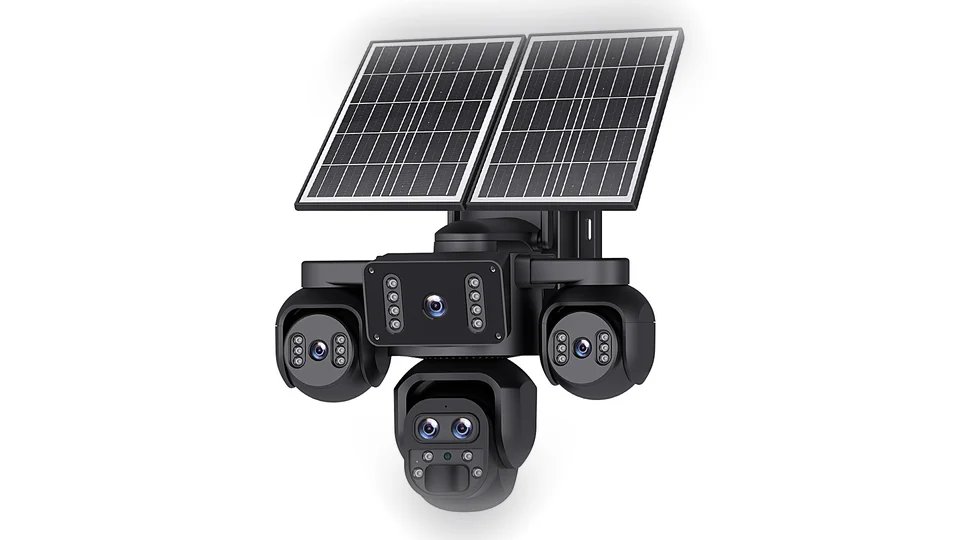
5-lens AOV, four channels
One pole, four views: a fixed lens in the centre, a ball either side and a twin-lens PTZ head below — four 5 MP channels on one SIM and a pair of panels.
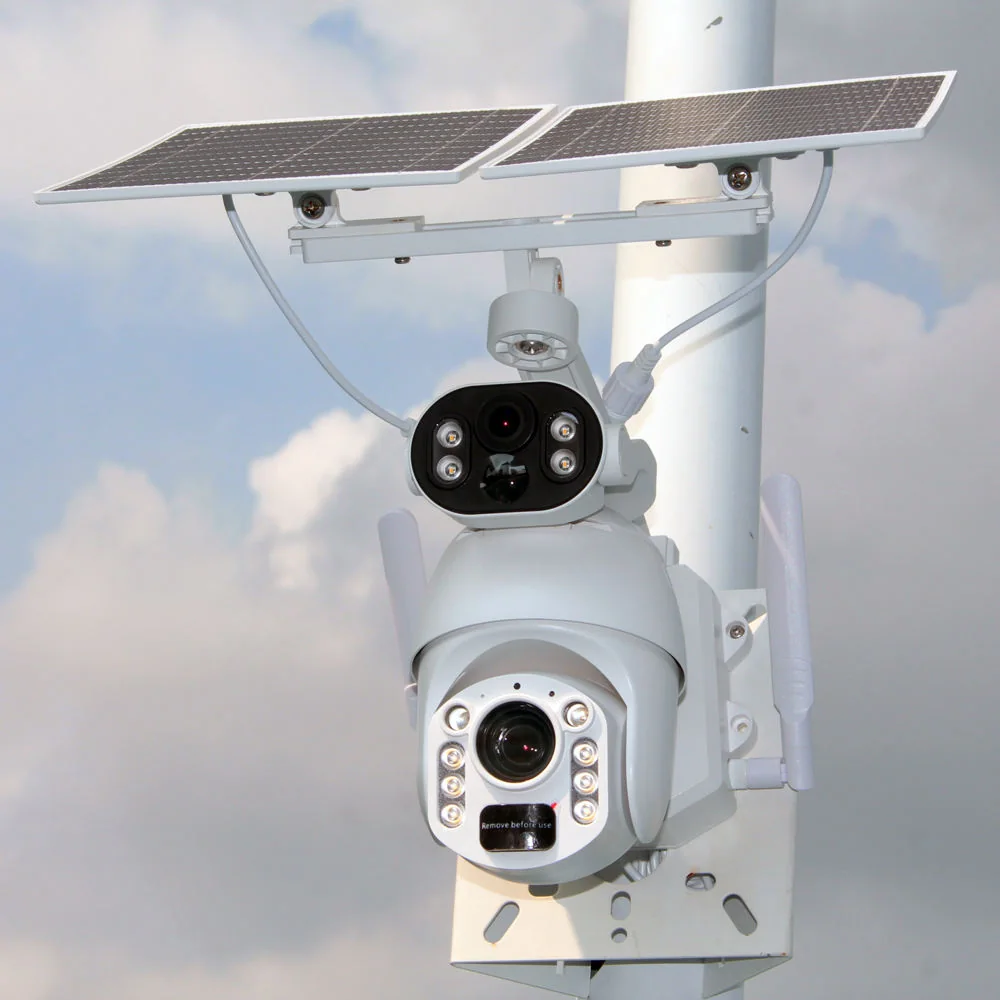
100x zoom dual-head camera
A long-range zoom head above a wide PTZ dome: two sensors, two views at once, a 12 W panel and 9,600 mAh, in light grey or dark grey.

Hunting camera A8, 4G
A battery camera for game trails and forestry blocks: 2K (4 MP) stills, a 120° lens and a PIR that triggers in 0.3 s. The solar panel is a separate item.
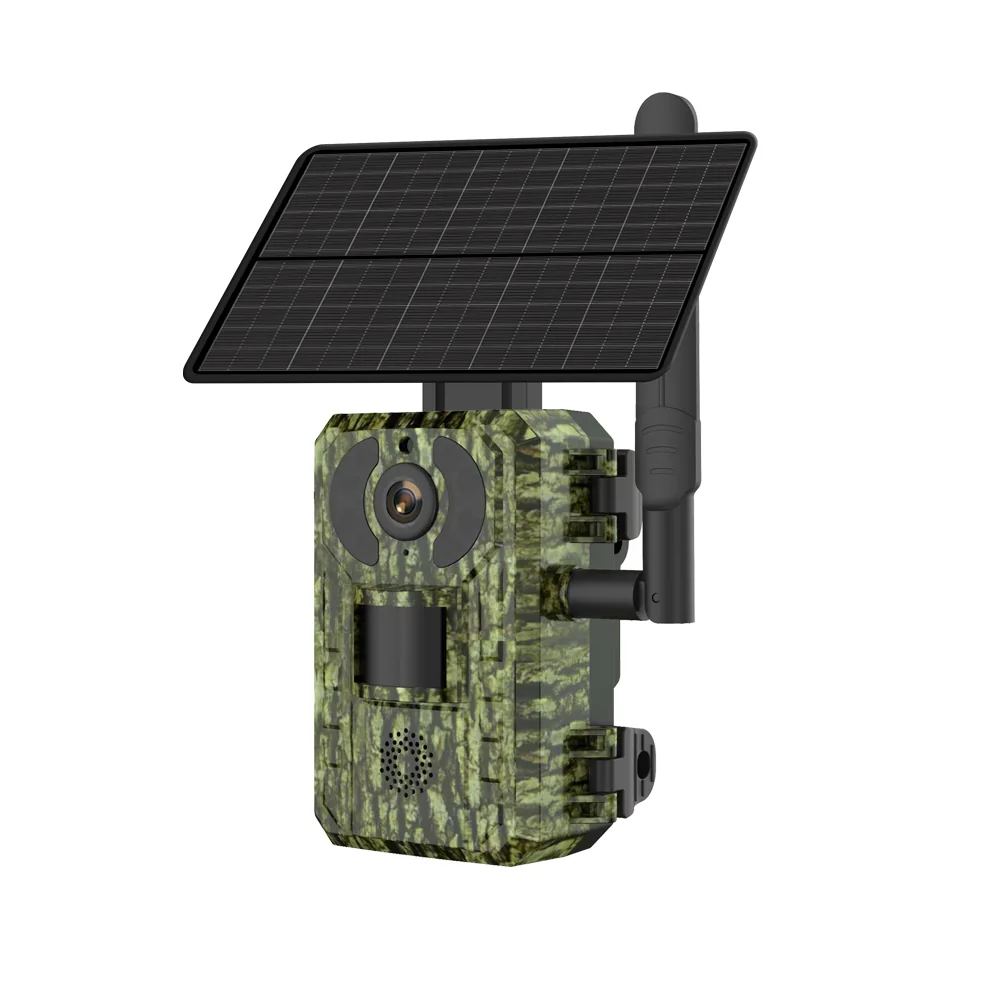
Hunting camera H10, 4G solar
The same job with the panel in the carton: 4 MP stills, 3 MP video, a 90° lens and a 6 W panel bolted to the bracket, reporting over 4G.
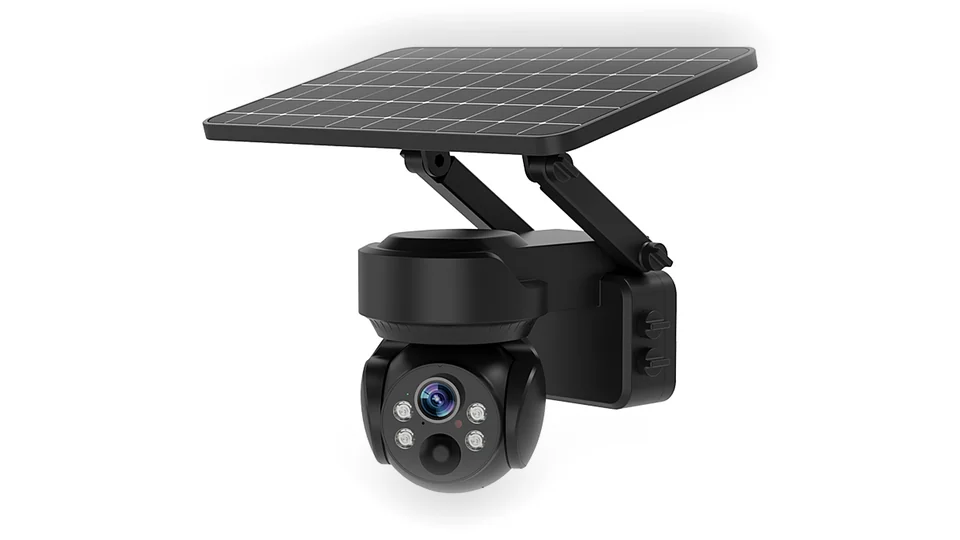
3 MP solar PTZ, PIR wake
The small build: one 3 MP head, a 5 W panel and 9,600 mAh. It sleeps at 0.03 W and wakes when something warm crosses the PIR — cheap, and honest about what it cannot do.
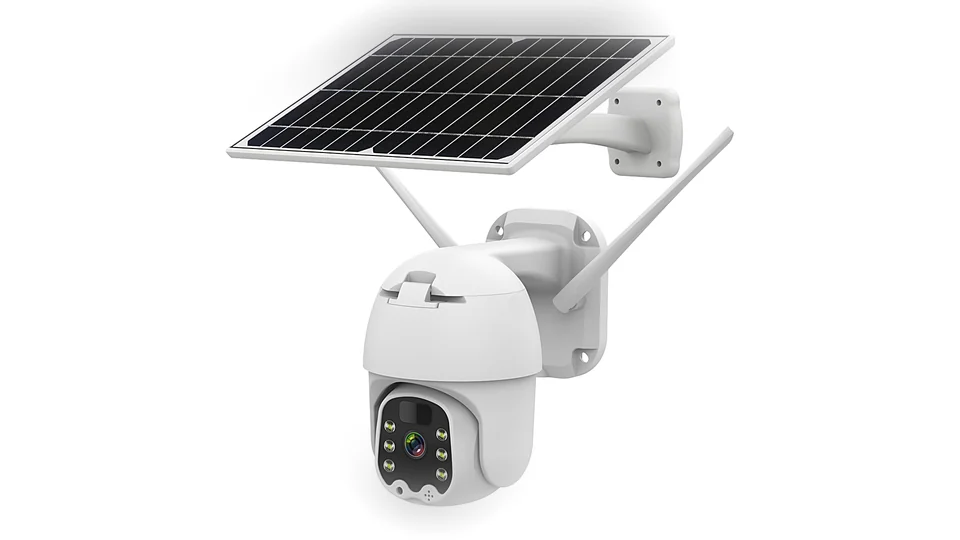
8 W solar PTZ, swappable cells
The same head sized up for a post nobody visits: an 8 W panel, six 18650 cells you can replace in year three, and a radar beside the PIR so it still triggers when the wall is hot.
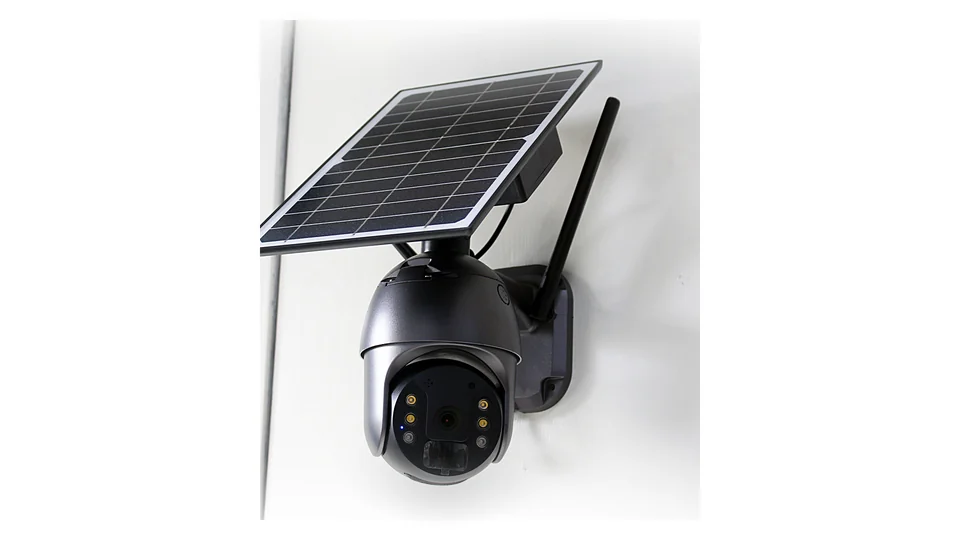
1080p solar PTZ, 3.6 mm
The narrow one: 76° instead of 120°, so 2 MP still puts a recognisable person at 20 m. Metal body, and the panel is a separate part.
Self-powered
A panel bolted to the same bracket as the camera, and a battery sized for the site's worst month — no mains cable, no trenching.
4G connected
No fixed line, no public IP, no port forwarding. The camera's own SIM handles the link and the app handles the rest.
Local recording
A card in the camera keeps footage on your premises, so a dropped link is an inconvenience rather than a gap in the record.
Eight systems, and what each one is for
| System | Typical channels | Best for | |
|---|---|---|---|
| AOV dual-lens camera | 1 camera, 2K, 120° + 60° | Continuous 24 h recording on farm tracks, gates and yards | Details → |
| 5-lens AOV, four channels | 1 camera, 5 lenses, 4 × 5 MP | Four angles off one pole, one SIM and two panels | Details → |
| 100x zoom dual-head camera | 1 camera, 2 heads, 6 MP | Identifying at distance and watching wide, from one pole | Details → |
| 3 MP solar PTZ | 1 camera, 3 MP, 120° | A long fence line on five watts, one PIR trigger at a time | Details → |
| 8 W solar PTZ | 1 camera, 3 or 5 MP, 120° | A post nobody visits for five years, where the cells get replaced | Details → |
| 1080p solar PTZ | 1 camera, 2 MP, 76° | One gate or approach, where a face at 20 m beats a wide empty view | Details → |
| Hunting camera A8 | 1 camera, 2K, 120° | Game trails and boundaries where a panel is bought separately | Details → |
| Hunting camera H10 | 1 camera, 4 MP, 90° | The same sites, with the 6 W panel in the same carton | Details → |
Not sure which fits? Send the site plan and we will tell you — including when a smaller system is the honest answer.
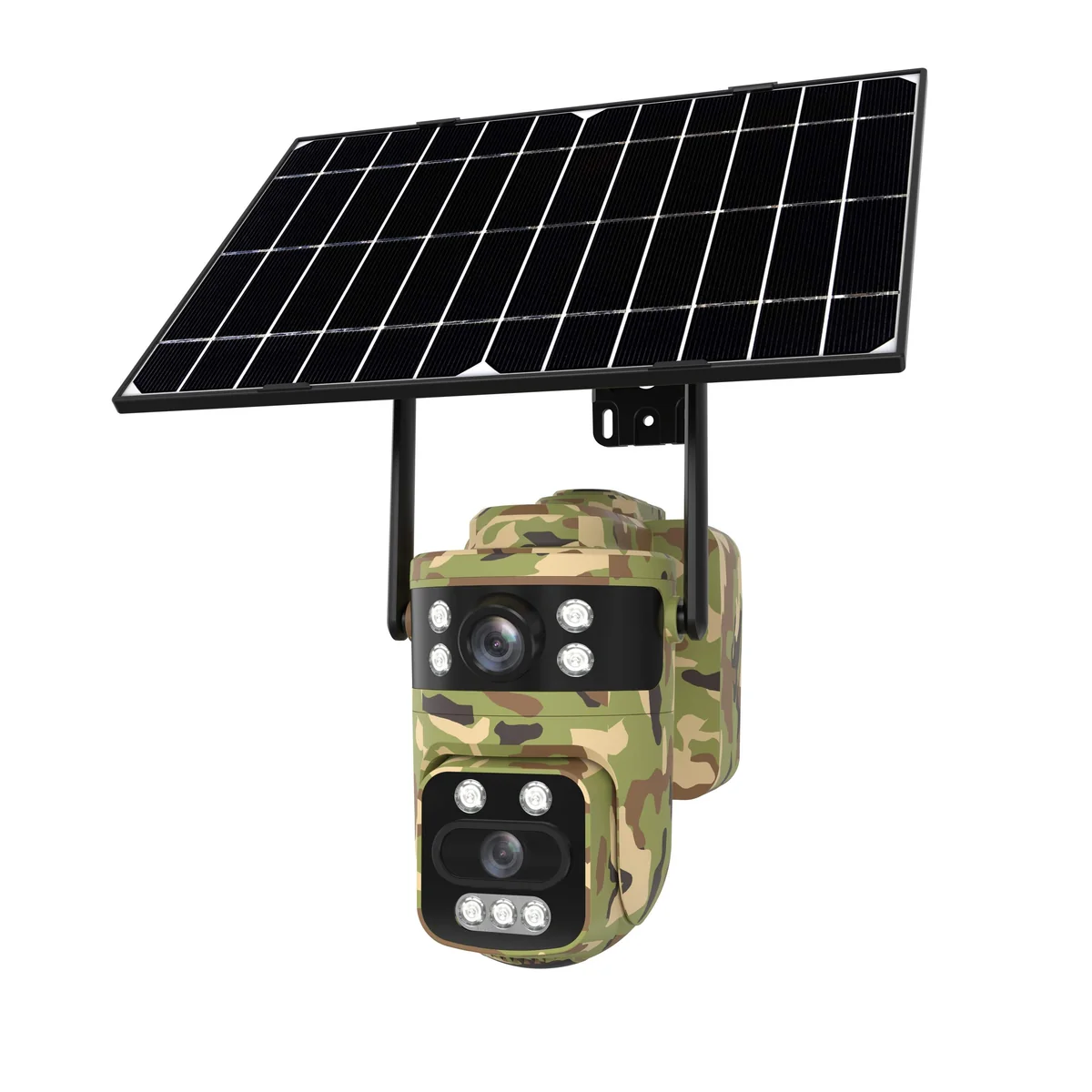
A camera that records 24 hours, not just when the alarm fires
Most battery solar cameras sleep between triggers, so the clip starts once the subject is already in frame. The Q10 / Q10 PRO keeps recording continuously at low power, with the solar plate bolted to the bracket above the head — a wide 120° lens plus a second 60° lens for detail on the same 360° head.
- 24 h AOV recording
- Dual 3 MP lens
- 4G LTE
- IP66
- 5 finishes
Four numbers decide whether a solar camera survives the winter
We ask for these on every quotation. A supplier who does not ask is guessing.
Latitude & shading
Worst-month sun hours for the exact site, plus anything that will shade the array in December.
Camera count & load
How many cameras, whether they pan, and how long the IR runs each night.
Recording duty
Continuous 24 h, motion-only, or scheduled hours — the single biggest variable in the power budget.
Days of autonomy
How many overcast days the site must ride out. Three is a minimum in a continental climate; five is comfortable.
Solar camera FAQ
Do I need mains power anywhere on site?
No. The system generates and stores its own power, and the 4G router replaces the network connection. The only thing you provide is a pole and, if you want remote viewing, a local data SIM.
How much sunlight does it need?
Panels need a few hours of unshaded daylight, not direct sun all day. What matters is the worst month: we size the array on that figure, so a site in northern Europe gets a larger array than the same camera count in the Caribbean.
Can I view the cameras from another country?
Yes, anywhere the phone has data. The Hik-Connect app connects over the internet through the 4G link on site; there is no fixed IP or port forwarding to arrange.
Read next
How to choose a solar security camera that survives its first winter — the sizing rules, the data costs, and the specification details that separate a working site from a brochure.
Size a solar system for your site
Send the location and what you need to cover. You get a power budget and a price, not a catalogue.