GT-Q5 · Solar · 8 W · 6 × 18650

Refill it in year three

Six 18650 cells behind a screwed cover, an 8 W panel above them and a head that wakes on PIR or on radar: this is the solar PTZ built for a five-year post rather than a one-season one. The cells are the part that ages first, so they are the part you can change. Everything else here — the panel size, the 18,000 mAh, the two sensors that have to agree — is aimed at keeping that swap the only maintenance the site ever sees.

  • 3 MP at 2304 × 1296, or 5 MP on the same 4 mm lens — 120° wide, 19 or 24 px per degree
  • 8 W monocrystalline panel on the same bracket as the head, so one mast does both jobs
  • 6 × 18650 under a screwed cover: up to 18,000 mAh, about 66 Wh, re-cellable on site
  • PIR and radar must both agree before a clip starts, 0–12 m across the same 120°
  • 355° pan and 120° tilt at 55°/s; six infrared LEDs to 30 m and a white light to 30 m
  • 128 GB micro SD or cloud; 3 W speaker, two-way audio; five 4G band builds or 2.4 GHz Wi-Fi
White 8 W solar PTZ camera: a monocrystalline panel on a bracket above a dome head with two antennas, six infrared LEDs around the lens

What do the extra three watts and the extra cells actually buy?

Time, and the option to watch. At thirty triggers a day and twenty minutes of live view the camera uses about 1.4 Wh; the 8 W panel puts back twenty-odd watt-hours on an ordinary day, so the panel is not there for the alarm duty — it is there for the evening someone decides to watch the feed for an hour. That costs 2 Wh, and 66 Wh of pack means the site can absorb a week of it, or a fortnight of no sun at all, without the camera going quiet in the middle of the night.

Specifications

Standard configuration

SpecificationDetail
ModelGT-Q5 (the Alibaba title calls it a CCTV box; the body is a pan-tilt dome)
Sensor3 MP CMOS, GC2063 class, 1/2.7″; 5 MP is a resolution option on the order
SoCIngenic T31ZL as printed on the spec sheet for both resolutions — check the 5 MP batch
Lens4 mm fixed, 120° horizontal; digital zoom only
Streams3 MP at 15 fps (2304 × 1296) or 5 MP (2880 × 1620); H.264+ and H.265
Night visionSix infrared LEDs to 30 m; a white light to 30 m; full colour, 0.00001 lux
Pan / tilt0–355° pan, 0–120° tilt; 55°/s pan, 40°/s tilt
DetectionPIR plus radar fusion, 0–12 m, 120°; mobile notification only, no siren promise
Power drawStandby 5 mA ≈ 0.02 W; working 350–400 mA by day, 500–550 mA at night
Solar panel8 W monocrystalline, bolted to the head bracket
Battery6 × 18650, 3,000 mAh cells as printed — 18,000 mAh, about 66 Wh
StorageTF card to 128 GB; cloud recording on alarm
AudioMicrophone and 3 W speaker, two-way audio, quoted talk range 20 m
Network4G LTE nano SIM in five band builds — Europe/Africa, America, Australia, Japan, South-East Asia — or 2.4 GHz Wi-Fi
AppUBOX on the listing, UBOX/iCam+ on the factory sheet; ask which firmware the batch ships
RatingIP65, outdoor and indoor
Temperature−30 to +50 °C, 0–80% RH
WarrantyOne year; cells are a consumable and are covered as one

The table describes the standard build; the order datasheet confirms the final configuration.

Product description

What six cells are for

The arithmetic of an eight-watt panel, and the evening habit that eats it.

Sixty-six watt-hours, and the nights they cover

Six 18650s at 3,000 mAh and 3.7 V is 66.6 Wh; count 53 Wh usable, because the controller stops well before the cells are flat. Standby is 5 mA — 0.02 W — which is 0.44 Wh across a whole day of doing nothing. Thirty PIR events of twenty seconds and twenty minutes of live view add about 1 Wh between them, so a quiet site sits near 1.4 Wh a day and the pack would run for five weeks in the dark.

DutyWh a dayDays with no sun
30 triggers, 20 min of viewing≈1.4≈35
80 triggers, 1 h of viewing each evening≈3.3≈16
One full 12 h night on the app≈24one night, then two or three days of sun

That third row is the honest one. Working draw at night is 500–550 mA, call it 2 W, so a twelve-hour night of continuous streaming is 24 Wh: nearly half the pack for one evening of curiosity. The build survives it — which the 5 W version does not — but it survives it once, and then it wants two or three clear days before it is comfortable again.

  • ≈66 Wh installed, ≈53 Wh usable (6 × 18650, 18,000 mAh)
  • ≈1.4 Wh a day at light duty; ≈3.3 Wh with an hour of live view every evening
  • ≈26 h of continuous night streaming on a full pack — two autumn nights, not three
  • 8 W panel: ≈28 Wh nominal at 3.5 peak-sun hours, ≈20 Wh into the pack; ≈6 Wh in December at one peak-sun hour
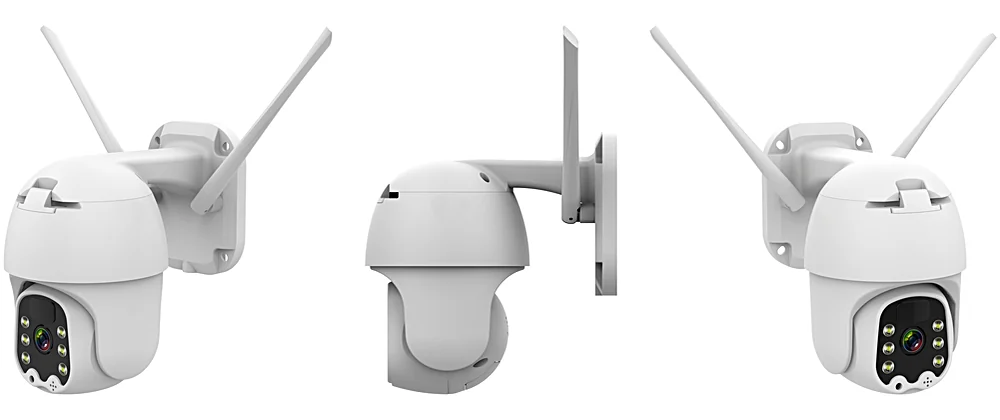
The same white PTZ head from three angles in a row, on white: front three-quarter, left profile, right three-quarter
One head, three angles: the wall plate is cast with the arm, so nothing shifts when the head pans.

The panel is not sized for the alarm

Eight watts against a 1.4 Wh day is a factor of fifteen, and it is worth saying plainly that nobody needs that margin for PIR duty — five watts would do. The extra array exists for two other days. The first is December at 52° north, where an 8 W panel flat on a bracket returns about 6 Wh and a 5 W one about 3.5, which is the difference between refilling the pack in a week and watching it sag. The second is the site where the client discovers live view, and starts opening the app every evening.

Radar, and the afternoon the wall is hotter than the man

A passive infrared sensor works on contrast: a body at 37 °C against a background at 20 °C is obvious, the same body against a wall that has been in the sun since noon is not. That is the failure mode this camera is built around, and it is why the factory pairs the PIR with a radar front end. Radar does not care about temperature; it cares about movement, and it hands the camera a trigger the moment something enters the cone, before the thermal signature develops. A vehicle at 50 km/h is inside 12 m for 0.86 s, which is not long for a PIR to settle and is ample for radar.

The cost is the other direction: radar cannot tell a branch from a burglar, and a gale in a treeline is a stream of triggers. So the two are ANDed — both have to agree — and the false-alarm rate ends up closer to the PIR's than to either sensor alone. What the listing does not publish is the radar module, its frequency or its share of that 5 mA standby, so if you are sizing a site on the power budget, ask us for the split rather than guessing.
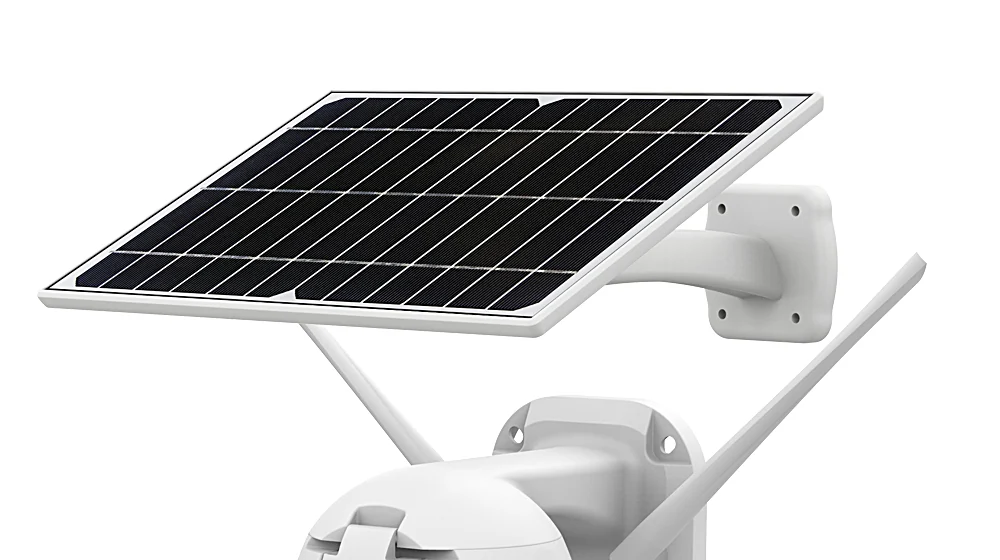
The 8 W monocrystalline solar panel mounted on its bracket arm, cables leaving from the underside of the frame
Eight watts on the same bracket: the panel tilts, the head pans underneath it.
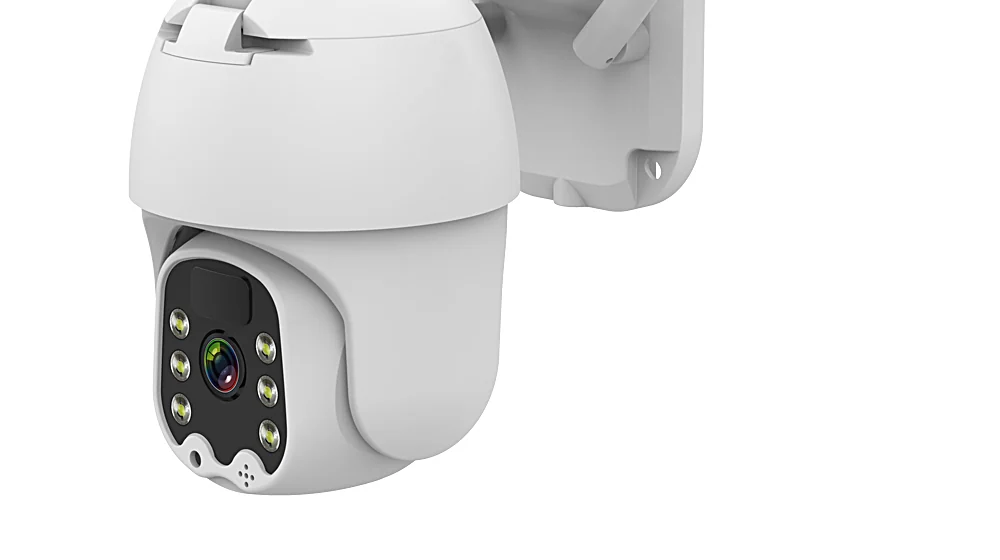
Close view of the head and lens plate: six infrared LEDs ringed around the lens, with the microphone holes and reset button below
The lens plate: six infrared LEDs and one microphone, 30 m of infrared.

What we would tell you before you buy it

If the camera has to see what happened before someone arrived, this is not it — no amount of panel fixes a sleeping sensor, and the AOV build is the one that records continuously. If you need a number plate at 100 m, this is not it either; that is the 100× dual-head. What this one does that neither does is survive a post nobody visits: six cells you can replace, a panel with margin, IP65, −30 °C, and two sensors that keep working in the heat. Buy it for the fifth year, not the first.

Three things the price does not buy

The cells are the service item, and the grade is not published

Six 18650s is the right decision for a post you intend to keep: in year three the pack is the only thing that has worn out, and a screwdriver fixes it. What the listing does not say is whose cells they are. The feature list says 3,200 mAh, the table says 3,000 — 19,200 against 18,000 mAh — so ask before you plan a five-year site, and buy matched cells when you re-cell it.

Radar does not see further, it sees in heat

The alarm distance is 12 m with the radar on, exactly as it was with PIR alone. What the second sensor buys is a trigger that still works when the wall behind the camera has been in the sun all afternoon, and one that catches a vehicle at 50 km/h inside the 0.9 s it spends in the cone. It also fires on moving foliage and heavy rain, which is why the factory ANDs the two.

The clip still starts at the trigger

Two sensors decide when to wake, not whether to record. Nothing is buffered while the camera sleeps, so the first second of an approach is missing and the clip opens with the subject already inside the 120°. If that gap matters more than a month of standby, the always-on AOV build is the honest answer, and it is on the same page as this one.

Questions

Questions

Can I really change the cells myself?

Yes — that is the point of the build. Six 18650 cells sit under a screwed cover; replace all six with matched cells of the same chemistry and capacity (3,000–3,200 mAh), not a mixed set from a drawer, because an unbalanced pack will read as a full battery and cut out early. Keep the gasket clean when the cover goes back on: the seal, not the cells, is what fails next.

What does the radar add that PIR cannot do?

Immunity to heat and a faster trigger. A passive infrared sensor looks for a warm body against a cooler background; on a day when the wall is at 45 °C the contrast collapses and the camera misses people it would have caught in March. Radar measures motion, not temperature, so it holds up in July — and it catches a car at 50 km/h inside the 12 m cone, where PIR may not settle in time. What radar cannot do is ignore a swaying branch or a downpour, which is why both sensors have to agree.

How long will it run with no sun at all?

About five weeks at light duty, two at heavy. 66 Wh of pack, call 53 Wh usable; thirty triggers and twenty minutes of viewing is roughly 1.4 Wh a day, so five weeks is arithmetic rather than optimism. Eighty triggers and an hour of live view every evening is about 3.3 Wh, and that is a fortnight. One full twelve-hour night on the app costs 24 Wh — nearly half the pack — and takes two or three good days to put back.

Is 5 MP worth it over 3 MP?

Only for identification distance, and only a little. The lens is the same 4 mm, so both versions cover the same 120°; the extra pixels buy 24 per degree instead of 19. A 1.8 m person is 247 px tall at 10 m instead of 198, and 123 px at 20 m instead of 99 — which moves the distance at which you can pick a stranger out of a line-up from about 20 m to about 25 m. It also fills the card faster and costs a little power. If your job is a gate at 15 m, 3 MP is enough.

Is there a siren, and how loud is the speaker?

The feature list promises an alarm siren and the table gives a 3 W microphone and a 20 m talk range, but no sound pressure level in dB at one metre — so we will not quote one. Ask us for the measurement on your batch if the siren is part of the security plan rather than a courtesy. What is certain is the two-way audio: 3 W is loud enough to be understood at a gate, not loud enough to be a deterrent.

Ask for a sample of the GT-Q5

Tell us the country, 4G or Wi-Fi, and 3 MP or 5 MP. You get the band build that matches your SIM, a duty-cycle estimate for your latitude and your worst month, and the cell grade in the carton you would actually receive.