Four kinds of site, four different power calculations
The camera is rarely the variable. What changes between a construction compound in the Gulf and a ranch in the Caribbean is sun hours, dust, distance and whether anyone is on site to notice a problem.
Watch a compound that has no power until next year
Temporary sites are the classic solar case: the utility connection arrives after the work is finished. A camera that records 24 hours a day on its own panel covers the gate and the material store, and reports over 4G, so the site manager sees the yard from wherever they are.
- Continuous 24 h recording — the clip starts before the subject walks in, not after
- Solar plate on the same bracket, so one pole is the whole installation
- Live view on demand and motion alerts on the phone
- Unbolt it when the job ends and take it to the next site
Cover the gate three kilometres from the farmhouse
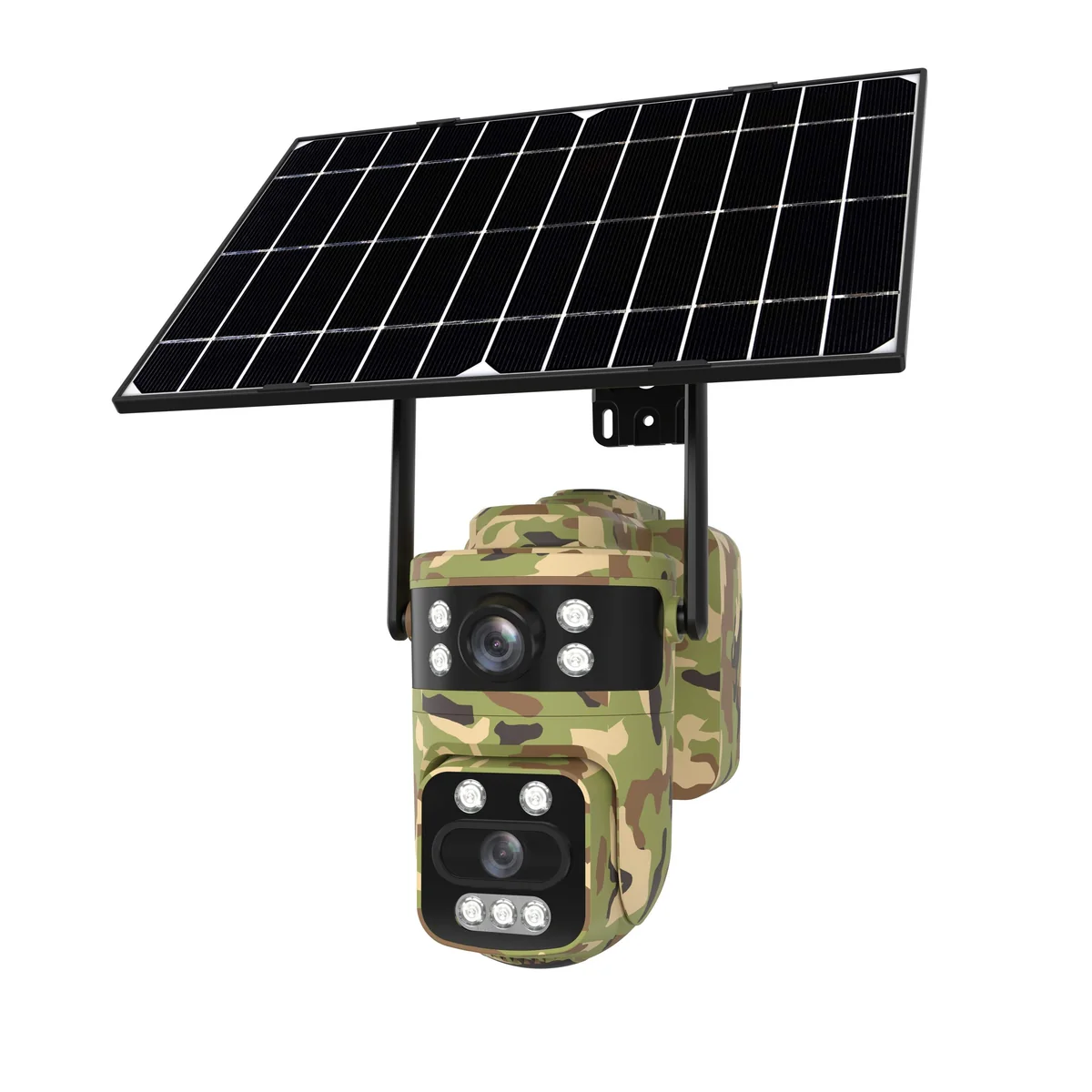
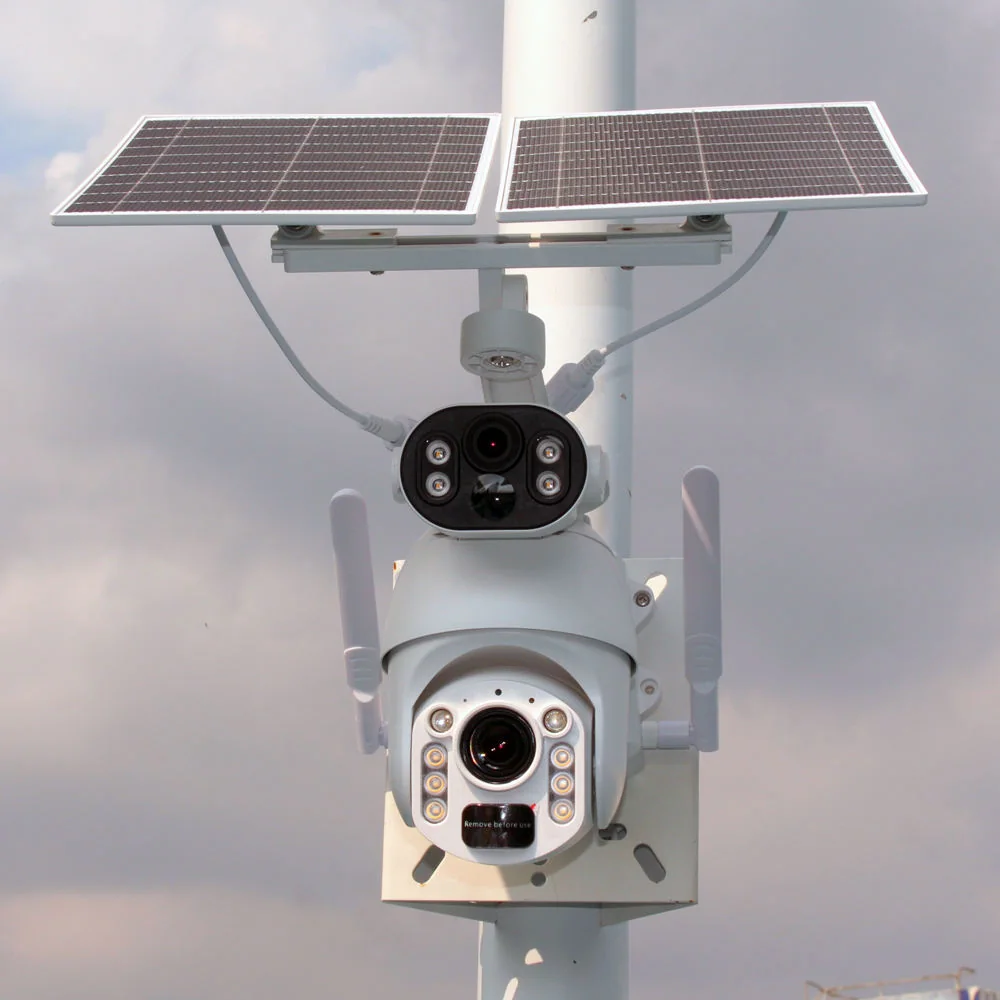
On agricultural land the distances make cabling nonsensical, and there is usually no network to join. A 100x zoom head reads a plate or an ear tag from one pole, and the wide dome under it shows what is happening around the subject at the same moment.
- 100x zoom head for plates and ear tags at range — hybrid zoom, so detail softens at the top end
- The wide dome covers the approach; the app shows both panes side by side
- 2 × 12 W of panel on the crossbar, sized for open sites and winter
- Recording on the card, so a rural signal gap does not cost you footage
A house that is empty for eight months of the year
Second homes and rental villas need presence, not a control room. The camera should be self-sufficient, survive a storm season, and give the owner a live view before they book flights because a neighbour reported something.
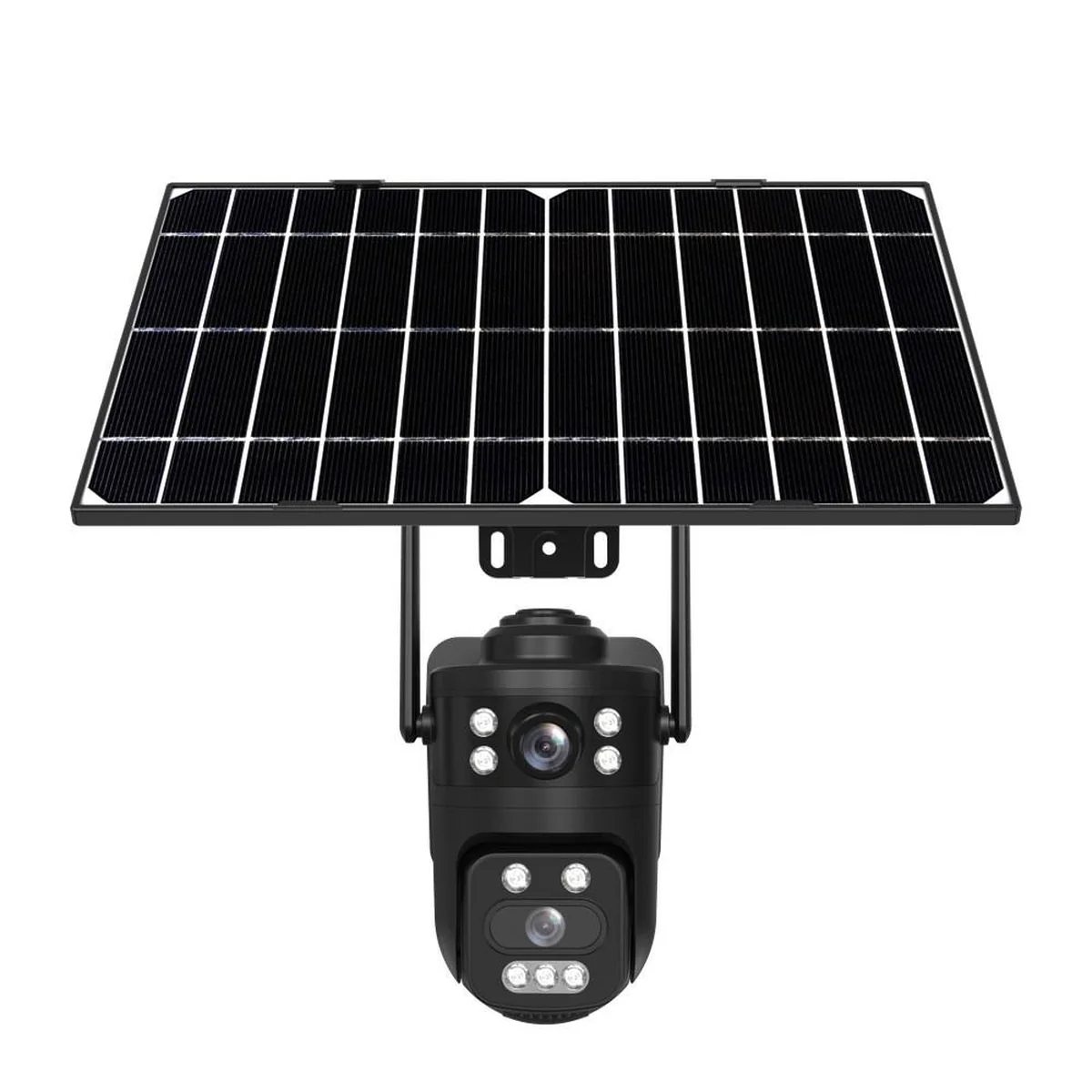
- Five housing finishes, including matte black and a bark pattern, so it does not advertise itself
- Battery state visible in the app — know the panel is producing
- 24 h recording, so a clip does not begin once the subject is already in frame
- The card stays in the camera; footage is not held by a third party
Know what happened before the driver calls
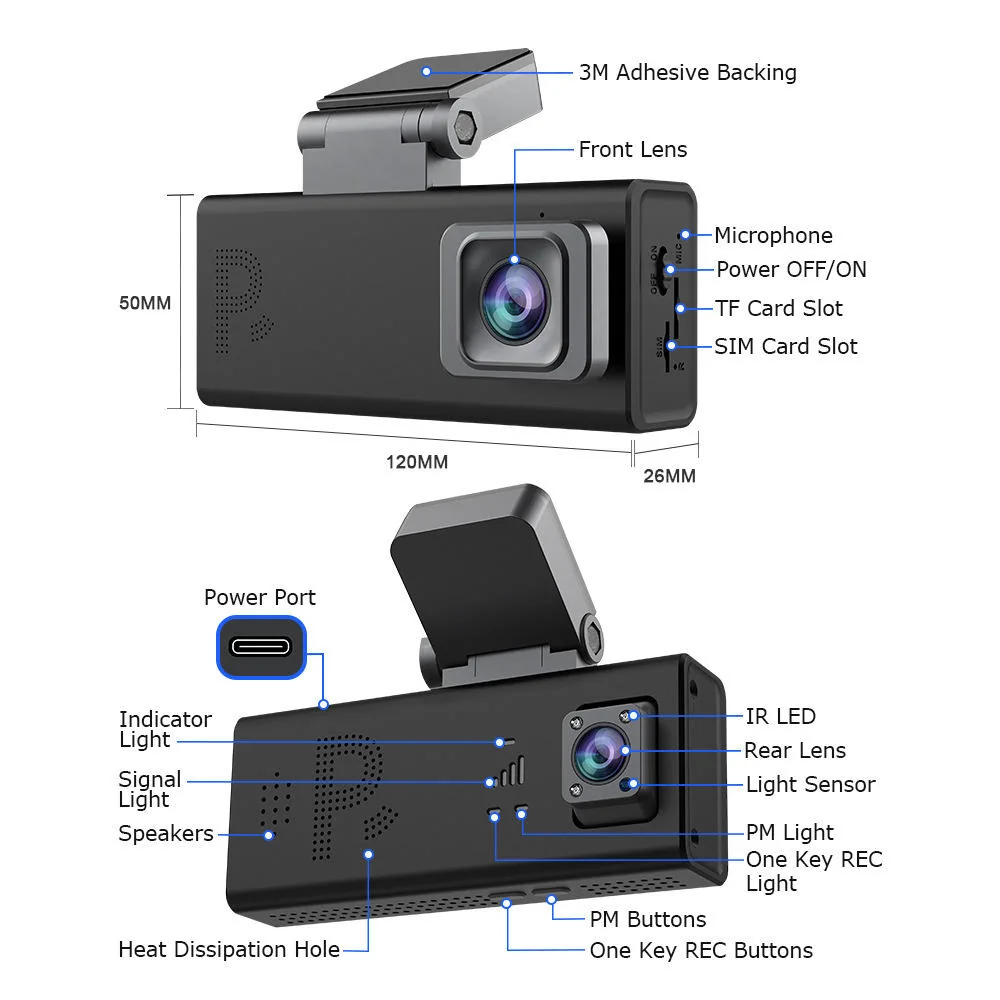
Vans, trucks, rental cars and plant machinery. The value is not the footage itself but how fast it reaches you: an event clip with GPS and a timestamp, on a dashboard, while the incident is still a conversation rather than a claim.
- 12/24 V hard-wire with ignition sense and parking mode
- Road lens for right-of-way, cabin lens for the people inside — or radar on both cameras to watch the rear
- GPS stamped on every clip, so the timeline is not a matter of opinion
- Supercapacitor build for hot cabs and long summers
Which system for which site
| Site type | Recommended system | Typical channels | Watch out for |
|---|---|---|---|
| Construction compound | BS200 solar 4G site kit, or an AOV camera on a small site | 1–4 | Theft of panel and camera — mount high, lock the bracket |
| Farm / ranch gate | 100x zoom dual-head camera | 1 | Distance to the subject; use the zoom head, not more cameras |
| Remote house / villa | AOV dual-lens solar camera | 1–2 | Dust and salt; panel cleaning schedule |
| Van or truck fleet | 4G dual-lens dash camera | 1 per vehicle | Data plan and card endurance |
| Single car | 4G single-lens dash camera | 1 | Parking-mode battery cutoff setting |
Not on the list?
Most of our work is a variation of these four. Describe the site and we will size it from first principles.