
Nothing to trench, nothing to subscribe to
It works anywhere without power and without an internet line. The tower runs from its own 200 W array and reaches the network over 4G, so a compound that is three months from a mains connection can be watched this week. The recorder is in the box, which means the footage is still there the month the SIM is not.
- 200 W solar system on an aluminium bracket, IP66 equipment box
- 2 × 8 MP PTZ cameras with 30× optical zoom
- 1 TB Hikvision NVR recording all the time, or only on motion
- Red-blue alarm light and a 120 dB speaker with two-way talk
- Works on 4G or WiFi — whichever the site has
The equipment box
Everything that is not a camera lives in one white IP66 cabinet: the 4G and WiFi router, the 20 A charge controller and the 1 TB Hikvision recorder. The rear panel is laid out for a technician rather than for a photo — RJ45 for the recorder, CAM1 to CAM4 for cameras, screw terminals for solar, battery and load, and PIR1 / PIR2 for the detectors.
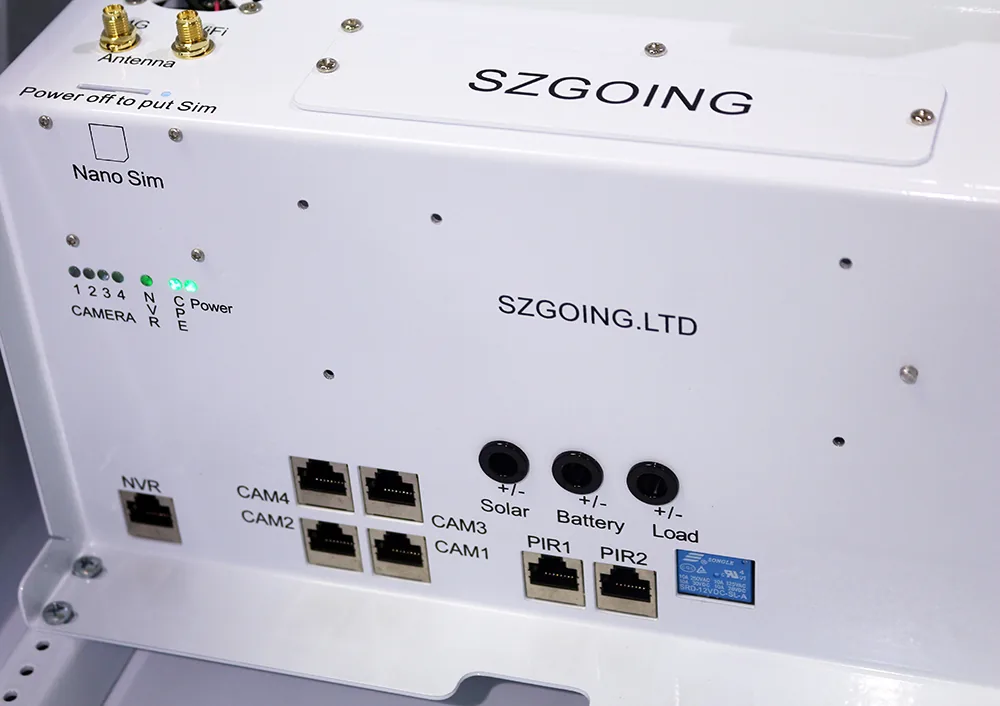
The SIM tray sits behind a cover marked power off to put SIM, and the LED row reports LAN, camera, 4G and power separately — the difference between a dead router and a dead camera is one light, not a site visit.
PIR, solar, battery, load
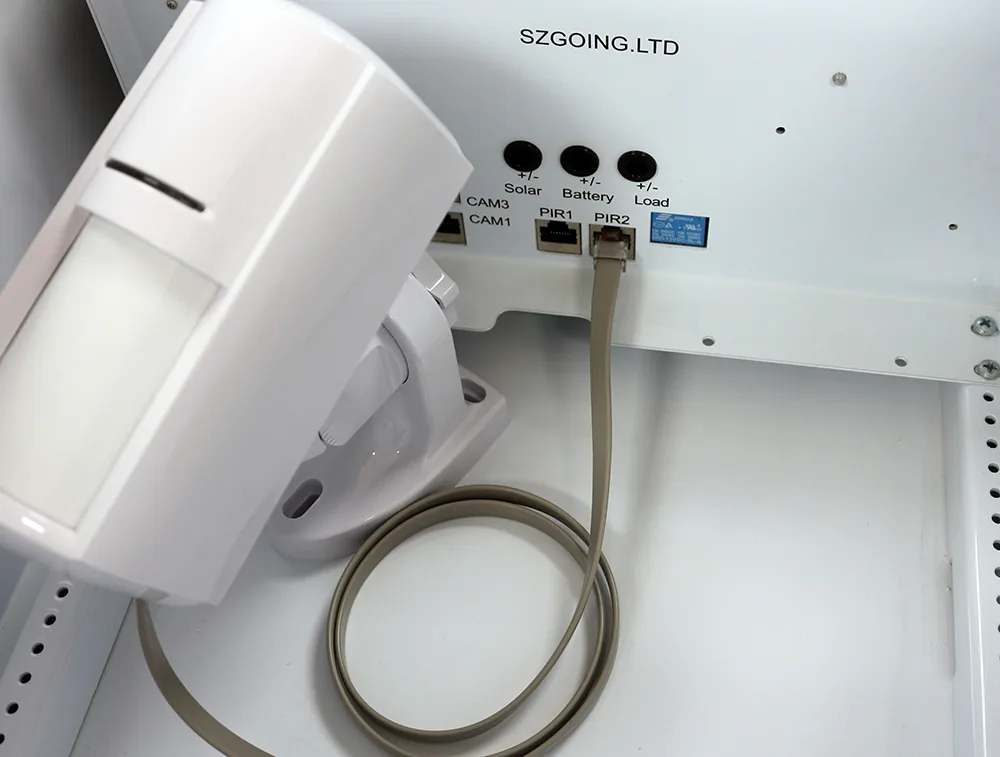
The detectors are wired, not wireless. A PIR pair brackets the approach and feeds PIR1 and PIR2, which is what triggers the light and the siren before the cameras have finished turning. Solar, battery and load are separate screw terminals, so the array can be isolated while the recorder keeps running.
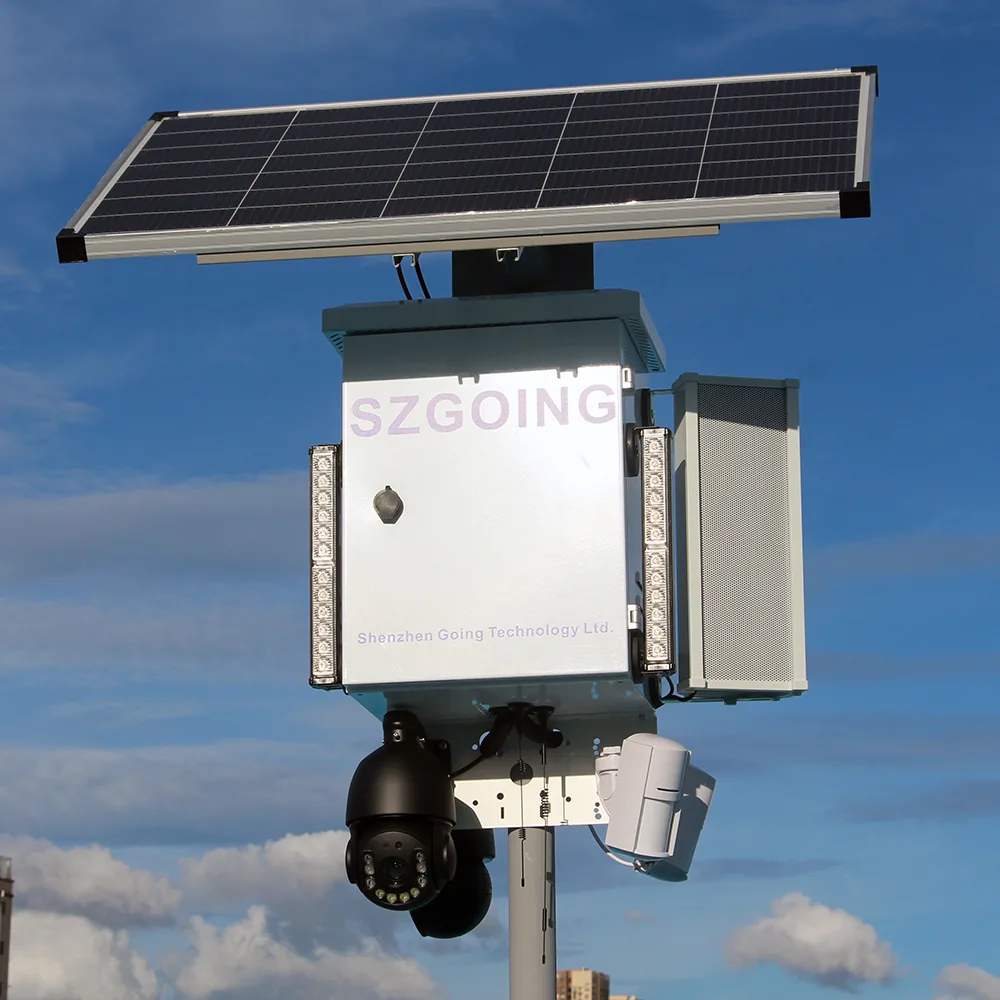
The tower in daylight
The panel sits above the box, tilted, with the camera heads on the plate below. Both heads pan independently, so one can hold the gate while the other sweeps the plant yard. A second view of the same tower shows the alarm bars lit and the speaker grille on the side.
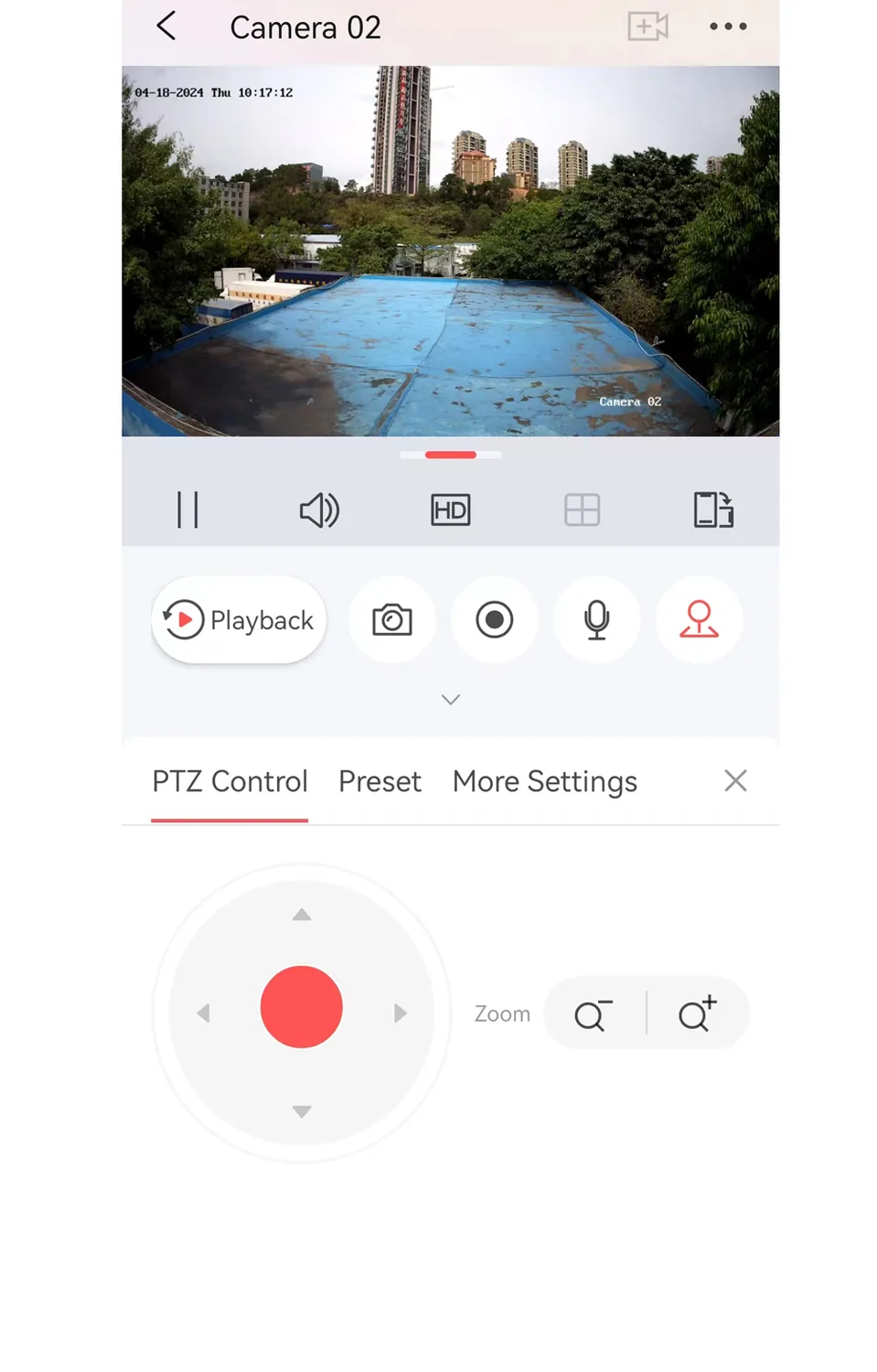
What the app shows
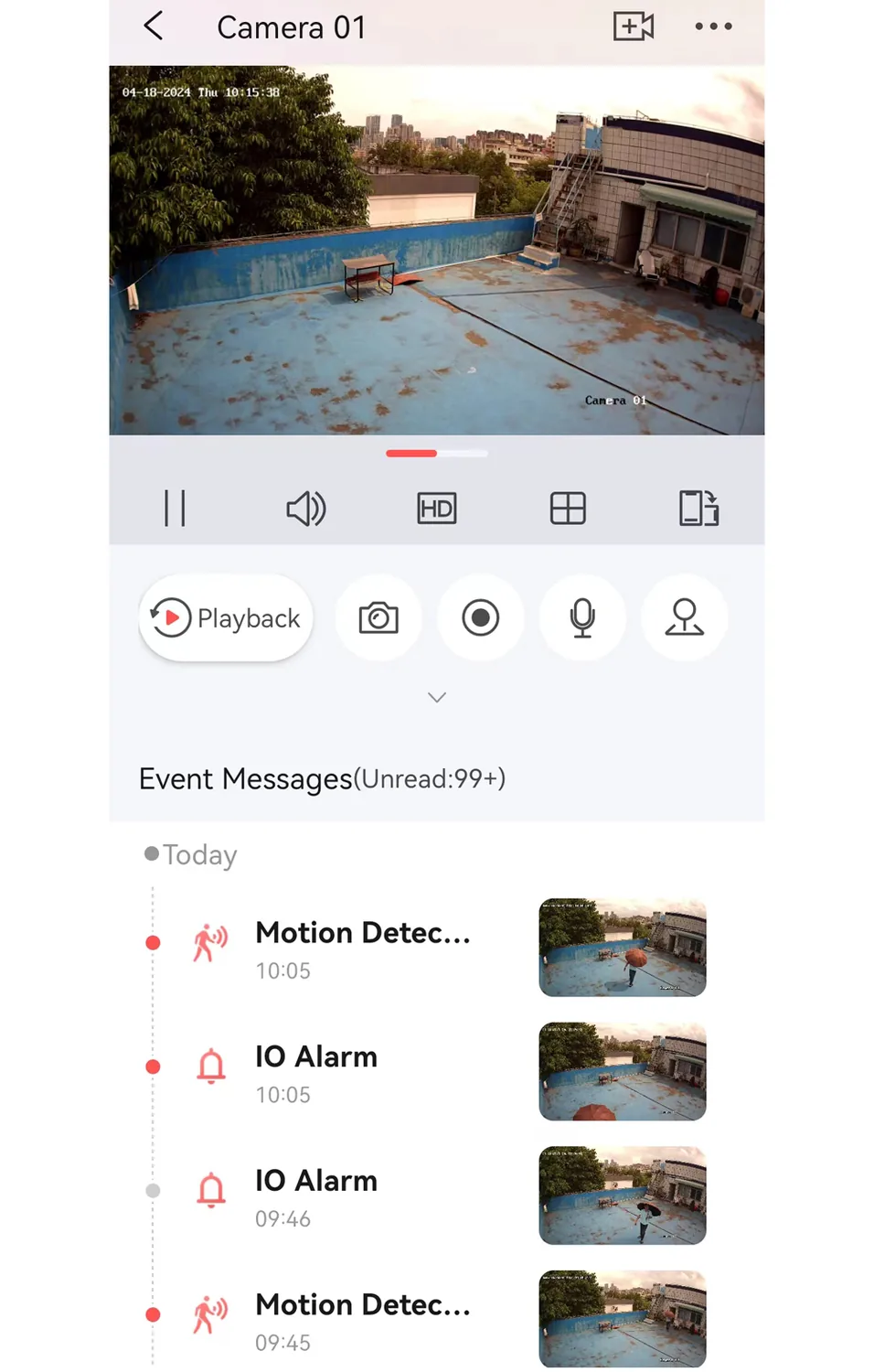
Live view runs in Hik-Connect with a PTZ pad, a zoom slider and a preset list per camera. The same screen carries playback, so a guard can scrub to the event without leaving the view. Events arrive as messages with a thumbnail and the trigger type — motion, or an IO alarm from the PIR.
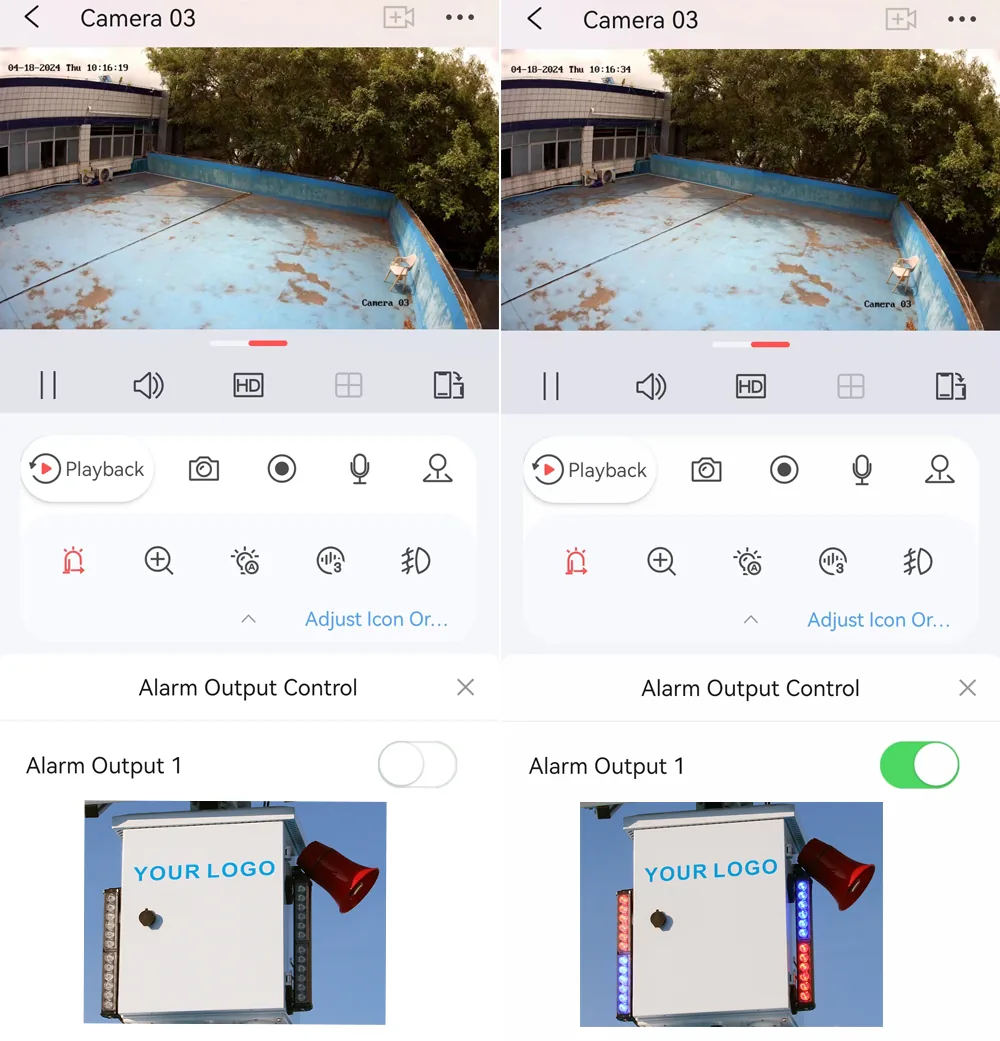
The alarm output is switchable by hand as well as by the detector — useful when the site is empty and a siren is wanted on demand, and the difference between an alarm that fires on everything and one a guard will act on.
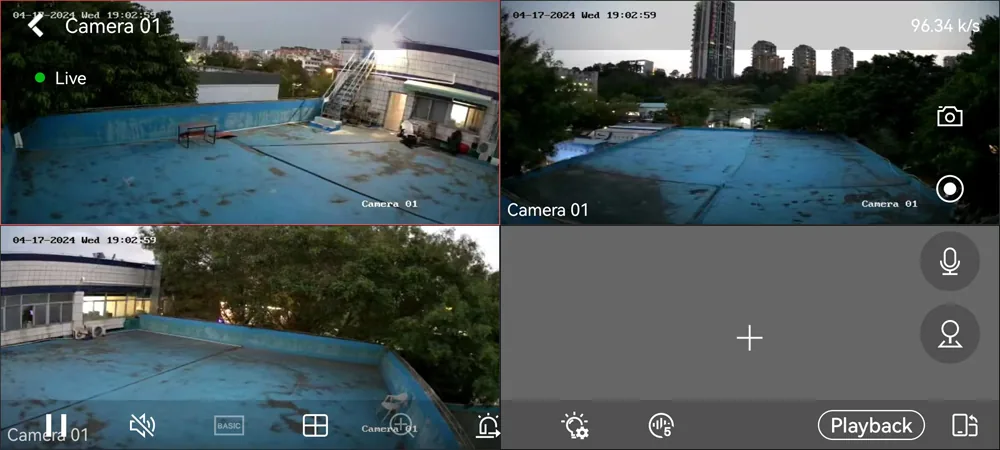
Playback, night and export
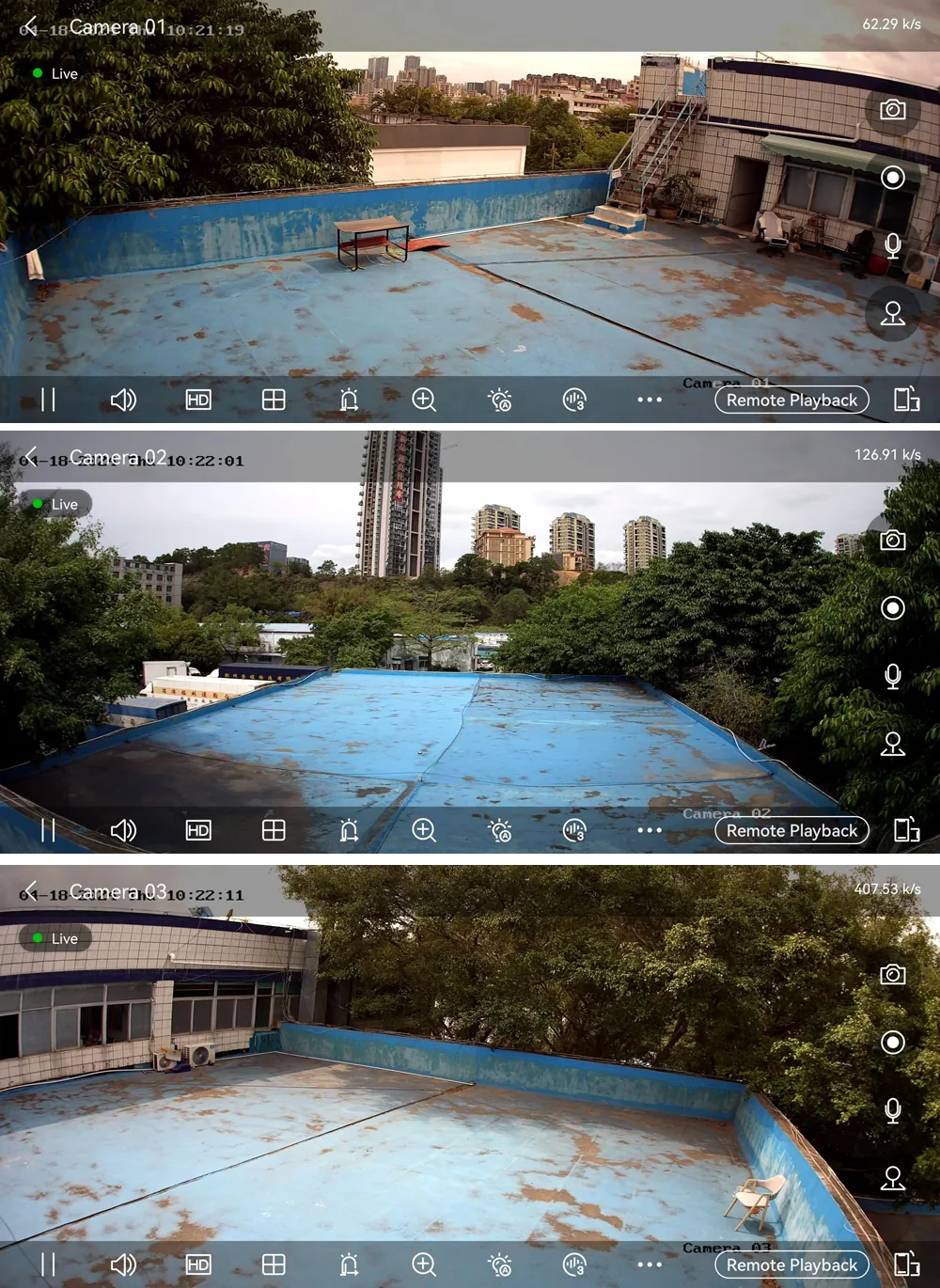
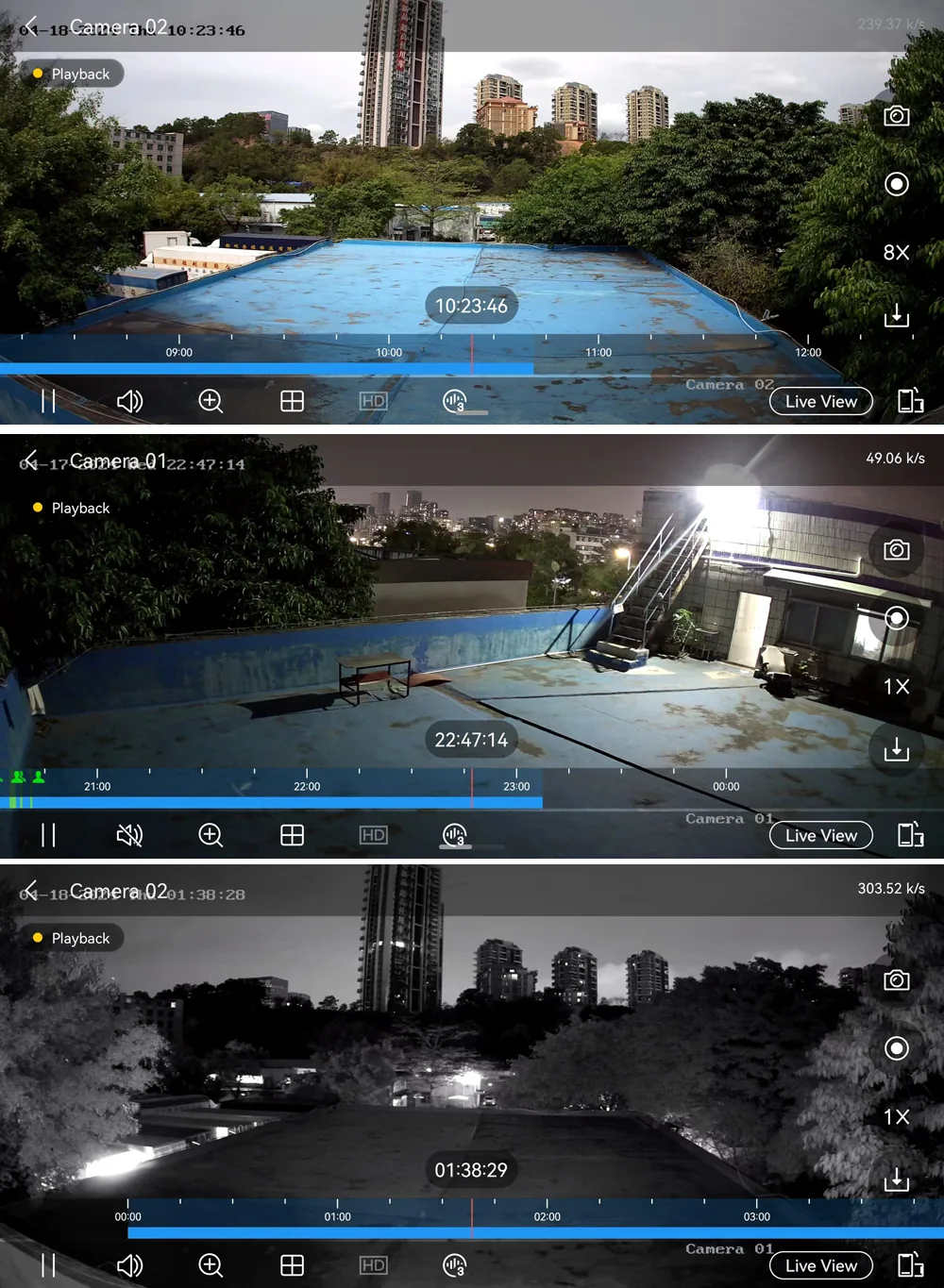
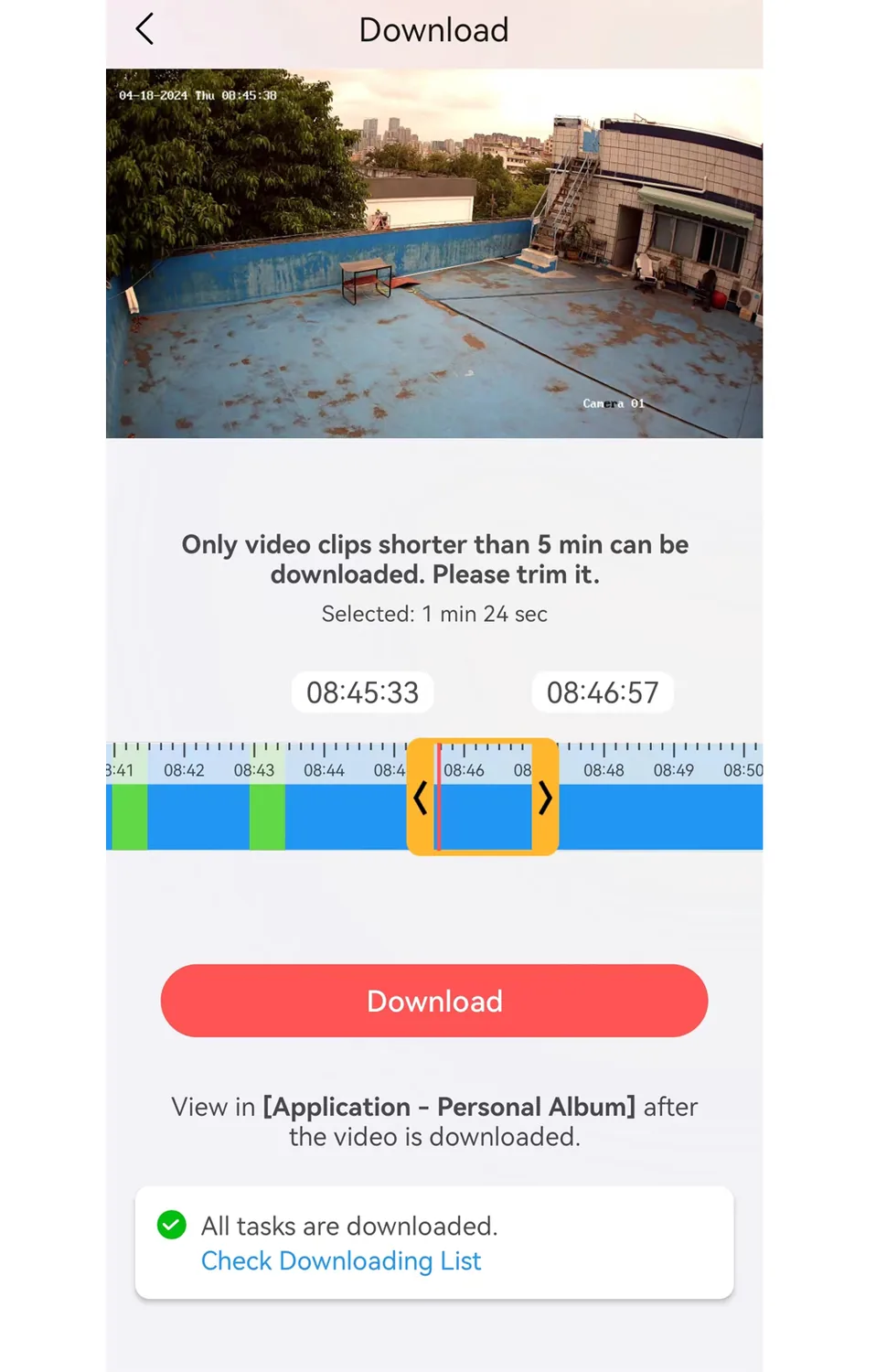
Playback is per camera or split across both, with a timeline that marks motion. Infrared footage at night stays usable at 100 m, and the dual-light mode brings colour back when something is close enough to identify. Clips export straight to the phone or to the free VMS on a laptop.
Power, honestly
Two 100 W panels and a 20 A controller will run this kit in most latitudes, but the battery is the part that decides a bad week. We quote the pack against your latitude and your recording mode rather than shipping a fixed one, and the kit takes lead-acid, 18650 or LiFePO4 on the same terminals. Say the country and the months you need it to survive and the numbers come back with the quote.