BS200-LPR50M-150 · ANPR · 5 MP · solar

A plate reader on a pole nobody has to wire

The same 5 MP road head, mounted on the site tower we already build: two 100 W panels, a 12 V 20 A controller, a 1 TB Hikvision recorder and a 4G router in the box, with the head looking down the road from a 60 mm pole. Forty-five kilograms, one afternoon, no trench from the nearest building and no meter to read.

  • GT-LPR50M-150 head: 5 MP Sony, 5–50 mm, 150 km/h, two lanes, 3200 × 1800 stills
  • 2 × 100 W mono panels and a 12 V 20 A controller; any 12 V battery, 100 Ah LiFePO4 recommended
  • 1 TB Hikvision H.265 recorder in the box — continuous video beside the plate log
  • 4G with a 12 dBi antenna plus 2.4 GHz WiFi; the plate decision stays on the camera
  • 45 kg kit; the pole and the battery are bought locally, and the kit takes any 12 V pack
  • Six fill lights, ONVIF, two relay outputs, 2 × RS485, TF slot for captures
SZGOING BS200 solar ANPR tower: a tilted solar panel over a white equipment box carrying the SZGOING mark, with one ANPR camera on a bracket below

Why put a plate reader on a solar tower?

Because the places worth reading plates are usually the places nobody has run power to: a haul road, a temporary site entrance, a weighbridge at the edge of a quarry, a depot gate at the end of a lane. The tower answers both halves of that — 200 W of panel for the electricity and 4G for the network — and adds the thing a bare camera cannot do on its own: a 1 TB recorder writing continuous video beside the plate log, so the morning after an incident you have the car and the plate, not just the plate.

Specifications

Standard configuration

SpecificationDetail
SolutionBS200-LPR50M-150-1T
CameraGT-LPR50M-150: 5 MP Sony Exmor 1/2.7″, 5–50 mm motorised zoom
ProcessorHiSilicon quad-core 900 MHz + 1 TOPS CNN engine, recognition on the camera
Capture / video3200 × 1800 still per event; 1080p25 H.265 streaming
Speed / lanes150 km/h, two lanes; reads 5–40 m
Recognition≥98% overall, >90% with zero samples, >99% after learning; 100+ countries
Archive1 TB Hikvision H.265 recorder in the box, plus 128 GB TF card in the camera
Solar array2 × 100 W mono: 18 V Vmp, 5.56 A Imp, 21.6 V Voc, 6.11 A Isc, 950 × 530 × 30 mm, 5.6 kg each
Charge control12 V 20 A PWM
BatteryNot included. Takes any 12 V pack — lead-acid, 18650 or LiFePO4; 100 Ah LiFePO4 recommended
Equipment box400 × 250 × 500 mm, aluminium solar bracket
Network4G/3G with a 12 dBi antenna (EU/Asia/Africa, Americas, Australia bands) and 2.4 GHz WiFi 802.11 b/g/n
Power budget≈0.5 kWh a day for head, recorder and router; ≈0.53 kWh harvested at 3.5 peak-sun hours, ≈0.30 kWh at 2
Outputs / inputs2 relay outputs; 2 opto inputs; 2 × RS485 to 115200
Kit weight45 kg
In the boxANPR camera, 2 × 100 W panel, 2 × aluminium bracket, equipment box with 4G router and 1 TB recorder and controller, 2 antennas, install toolkit
Not includedPole, battery, SIM (Nano)

The table describes the standard build; the order datasheet confirms the final configuration.

Product video

What the recogniser writes down

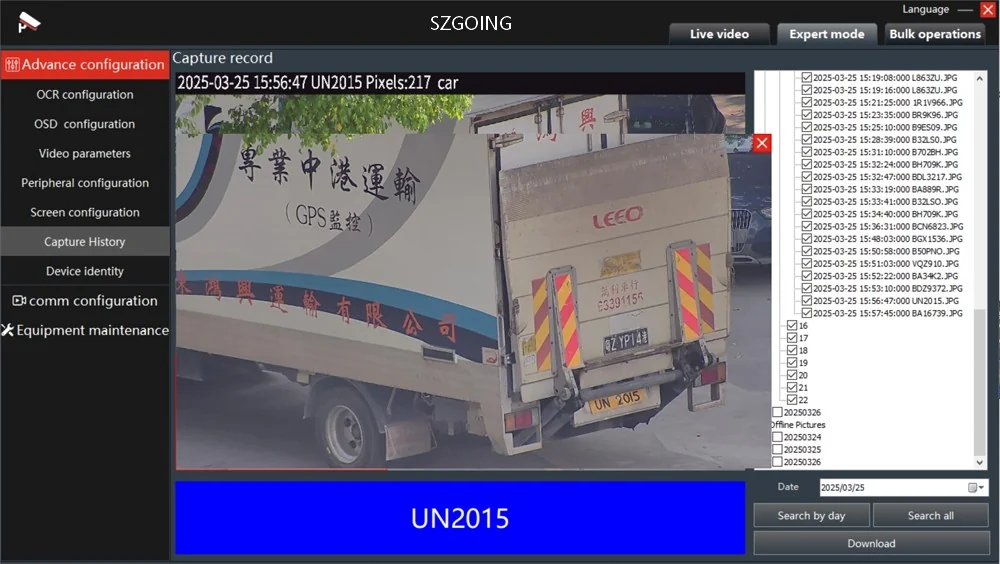
The same desk software on a two-lane road: the plate boxed, the plate enlarged, and a record row with the time, the lane and the confidence. On the tower this runs beside the recorder, so the video and the log are on the same box.

Factory footage; the trim and re-encode are ours.

Product description

A plate log where there is no supply and no duct

Why the tower exists, and what it costs you in kilograms and kilowatt-hours.

The places that need ANPR are the places with no services

A permanent barrier at a shopping centre has power in the cabinet and a network switch upstairs; a camera there is a purchase, not a project. The sites that actually want a plate log are the other kind: a haul road out of a borrow pit, a temporary entrance while a building goes up, a weighbridge at the far end of a quarry, a depot gate down a farm track. Nobody has run a duct to any of them, and the nearest supply is a thousand pounds of cable away.

The tower answers both halves at once. Two 100 W panels and a 12 V controller make the electricity; a 4G router with a 12 dBi antenna and a choice of three band plans makes the network; and both live in the same 400 × 250 × 500 mm box as a 1 TB recorder. Forty-five kilograms arrives on a pallet, and two people with a ladder put it up in an afternoon.
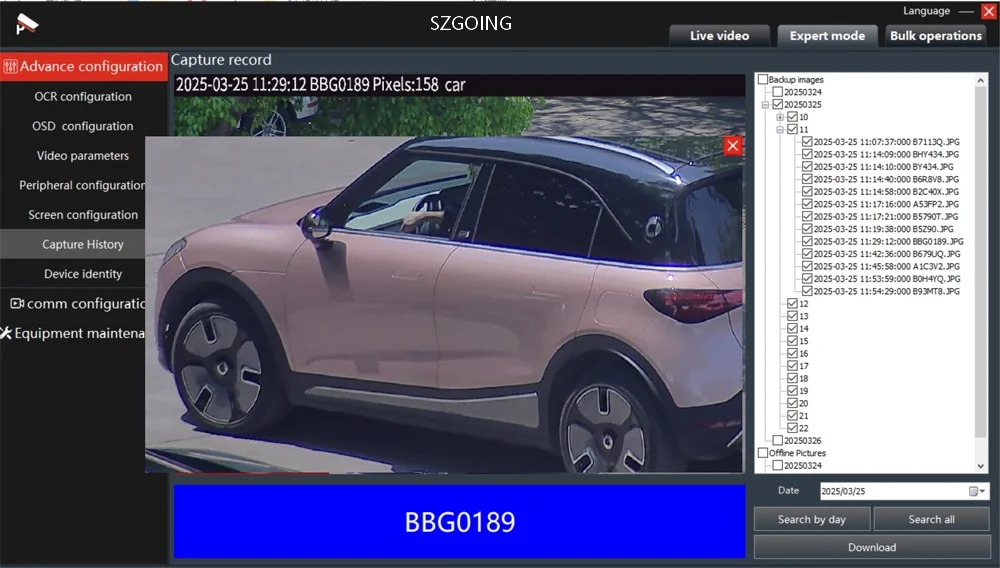
The ANPR capture window at dusk: a crossover with the plate BB60189 enlarged in a blue band and the record list beside it
Dusk on the approach: the plate is boxed, enlarged, and written to a row with the time.
A lorry with a tarpaulin body beside the capture record table, plate UN2315 enlarged beneath
The recorder's other half: the same moment as video, so the lorry and the load are on the drive too.

The load is one head, and that is the point

An ANPR head is asked to run 24 hours, with fill lights for part of it, and to stream to a recorder the whole time. Add the recorder and the router and the daily figure lands near 0.5 kWh — small next to a four-head site tower at 1.2 kWh, which is why 200 W is enough here. What would break it is decoration: a flood light on the same relay, an alarm beacon, a second head. If you need those, say so at the quote and we size the array for them rather than adding 0.3 kWh of load to a 0.53 kWh day.

Who should not buy the tower

A gate with mains power and a switch inside: the wired head is a fraction of the money and has no battery to replace in four years. A site that needs the plate at six metres rather than forty: the 4 MP version of this tower is the same box with the right lens. And a site where the plates do not matter and the people do — that is a site kit, and it costs less because it is not doing the recognition at all.

Three numbers that decide whether 200 W is enough

About half a kilowatt-hour a day, against half a kilowatt-hour collected

The head, the recorder and the router sit near 20 W averaged over a day: 0.5 kWh. Two 100 W panels return about 0.53 kWh at three and a half peak-sun hours after controller losses, and about 0.30 kWh in a grey December. Summer runs a small surplus; winter draws the pack down by roughly 0.2 kWh a day, which a 100 Ah LiFePO4 covers for six days without sun.

A terabyte is the reason to take the tower, not the plate

The camera already logs every plate to its own card. The recorder is for everything else: continuous video of the approach, the car that came in behind the one with the plate, the twenty minutes before and after. 1 TB at 4 Mbit/s is about twenty-three days for one channel, and it keeps working the month the SIM runs out.

It is the BS200 platform with a different head

Same pole adapter, same two-panel bracket, same equipment box, same 12 V 20 A controller as the site towers — which means the pole, the battery and the mounting detail are already written down, and a site that later wants an alarm or a flood light adds it to the same box. The BS200 site kit page carries the mounting and battery arithmetic in full.

Questions

Questions

What do I have to buy locally?

A pole of 60 mm or less, a 12 V battery and a Nano SIM. The pole because shipping one costs more than the steel is worth and every site has a different height; the battery because it is hazardous freight and usually cheaper in-country, and because the right capacity depends on your latitude. The kit takes any 12 V pack — a 12.8 V 100 Ah LiFePO4 is what we quote, and 40–50 Ah is enough in the tropics.

How high does the head go, and does the angle matter?

Higher than the plate, looking down: a head at 3 m reading a plate 20 m away is looking down about 8.6°, well inside the ±65° horizontal and 60° vertical the recogniser accepts. What matters more than height is that nothing crosses the line of sight — a sign, a branch, the corner of a container. Aim it once with a laptop on the pole and the fill lights on; the picture in the browser is the test, not the metre.

Will 200 W run it through a northern winter?

It will run it and draw the battery down. The load does not change with the season: about 0.5 kWh a day for the head, the recorder and the router. The array returns about 0.53 kWh in summer and 0.30 kWh in December at two peak-sun hours, so a northern December costs you roughly 0.2 kWh a day — six days of autonomy on a 100 Ah LiFePO4, then the arithmetic needs a bigger array. We size the pack against your latitude rather than shipping a token one.

Can the recorder hold the plates as well as the video?

The plate records live on the camera and export as a report; the recorder holds the video. That split is deliberate: the log stays readable even if the recorder fails, and the video stays continuous even if somebody clears the log. Both are on the same box, so there is one thing to power and one thing to visit.

Does the array run the fill lights?

Yes, and they are the reason the load figure is 0.5 kWh rather than 0.3. Six LEDs are on for part of the night in the default mode; set them to a time window rather than 24 hours and the daily figure falls. On a site with street lighting already, set the lights to smart mode and let the sensor decide — the plate is lit by the road, and the camera stops paying for light it does not need.

Quote a BS200-LPR50M-150

Tell us the country, the distance from the pole to the plate, and whether the pole is already in the ground. You get the array sizing for your latitude, the battery recommendation and a delivered price.