BS200 · Construction site · 4G

The same tower with the recorder taken out

Two 30× PTZ heads, a 200 W array, the white IP66 box — and no NVR inside it. Each head records to its own 256 GB card, so the box carries only the controller, the router and the switch. It is the same tower as the Hikvision builds with one part removed, and that one part changes what the system is good at.

  • 2 × 8 MP PTZ, Sony 415 sensor, 30× optical at 3.2–96 mm, 0–360° endless pan
  • 256 GB in each head — 512 GB in total, no recorder and no drive bay in the box
  • Video Link app and the free 64-channel VMS for PC
  • AI human tracking, full colour at night, 100 m infrared, two-way audio
  • 200 W array and a 20 A controller, with room to spare for a two-head load
  • One failure costs one camera's footage, not the whole record
SZGOING BS200 dual PTZ solar tower with the card build: two 100 W panels above a white equipment box badged SZGOING and two black PTZ heads hanging under it

What changes when the recorder is removed?

Three things. Retention halves — 512 GB across the two heads is about six days of continuous footage each, against roughly eleven on a 1 TB recorder. Exporting gets slower, because a day of footage has to come off a card or down the 4G link rather than off a drive over USB. And the single point of failure moves: a dead recorder used to cost the whole record, and now a dead card costs one camera. On a two-head tower with the heads forty metres apart, that trade is usually worth taking.

Specifications

Standard configuration

SpecificationDetail
Solution nameBS200-A2VL4K30X
Cameras2 × PTZ, Sony 415 sensor, 8 MP
Zoom30× optical, 3.2–96 mm varifocal
Pan / tilt0–360° endless pan, 0–90° tilt
TrackingAI human and vehicle tracking
Night vision100 m infrared, smart dual light, full colour at night
CompressionH.265+
Storage256 GB in each camera, 512 GB total — no recorder in the box
Recording time≈6 days continuous per head at 4 Mbit/s; weeks on motion
Network4G LTE + 2.4 GHz WiFi, one SIM for both heads
Remote accessP2P on the device serial — Video Link app, free 64-channel VMS
AudioTwo-way on both heads
Solar array2 × 100 W mono panel on an aluminium alloy bracket
Charge control12 V 20 A controller inside the box
Power budget≈0.31 kWh a day for two heads plus router; 0.30 kWh harvested at 2 peak-sun hours
BatteryNot included — 12.8 V 50 Ah LiFePO4; 100 Ah for a site that runs dark
Equipment box400 × 250 × 500 mm, IP66, white powder coat, logo on request
MountingPole adapter for 60 mm poles, up to 170 mm on request
DeliveryDDP sea or rail plus express, door to door, 3–4 weeks
ExcludedPole and 12 V battery stay local

The table describes the standard build; the order datasheet confirms the final configuration.

Product video

Nineteen seconds of one head's picture

One head on this tower working a street: a person crossing, a parked car, and then the same frame in infrared as the mode switches. Factory footage, watermark left in.

Factory footage; the trim, re-encode and backdrop are ours.

Product description

Same tower, one part missing

Why we build the BS200 without a recorder, and who should not buy it.

A recorder is a single point of failure

Every Hikvision build on this site puts a 1 TB drive in the box and calls it a day. It is the right answer for most sites, and it has one property nobody mentions until it bites: the drive is shared. One failure and the whole record is gone, including the fortnight you had not exported yet. Putting 256 GB in each head changes the shape of that risk — a card failure costs one camera's footage and leaves the other intact.

  • 512 GB total across two heads, no drive bay, no NVR in the box
  • ≈6 days continuous per head at 4 Mbit/s, weeks on motion
  • Recording continues when the SIM plan lapses or the network drops
  • Exporting means a card reader or a 4G download — slower than USB
  • No central timeline: two heads, two archives, two searches

We build both because sites differ. A compound with a security office and a wall of monitors wants one timeline and does not care where the drive lives. A fenced plot with a head at each end, checked from a phone on a Friday, is better served by two independent cards and a smaller box.

What is left in the box

A 20 A controller, the 4G router, the switch and the antennas. Removing the recorder takes out the drive, its bay and about 10 W of continuous heat — which is why this build has more power headroom than the Hikvision one on the same two panels. Two heads and the router sit near 0.31 kWh a day; the array returns 0.30 kWh at two peak-sun hours, so the pack only has to cover the difference, not the whole night. That is also the honest answer to why we still recommend 50 Ah here and 100 Ah on the four-head build.
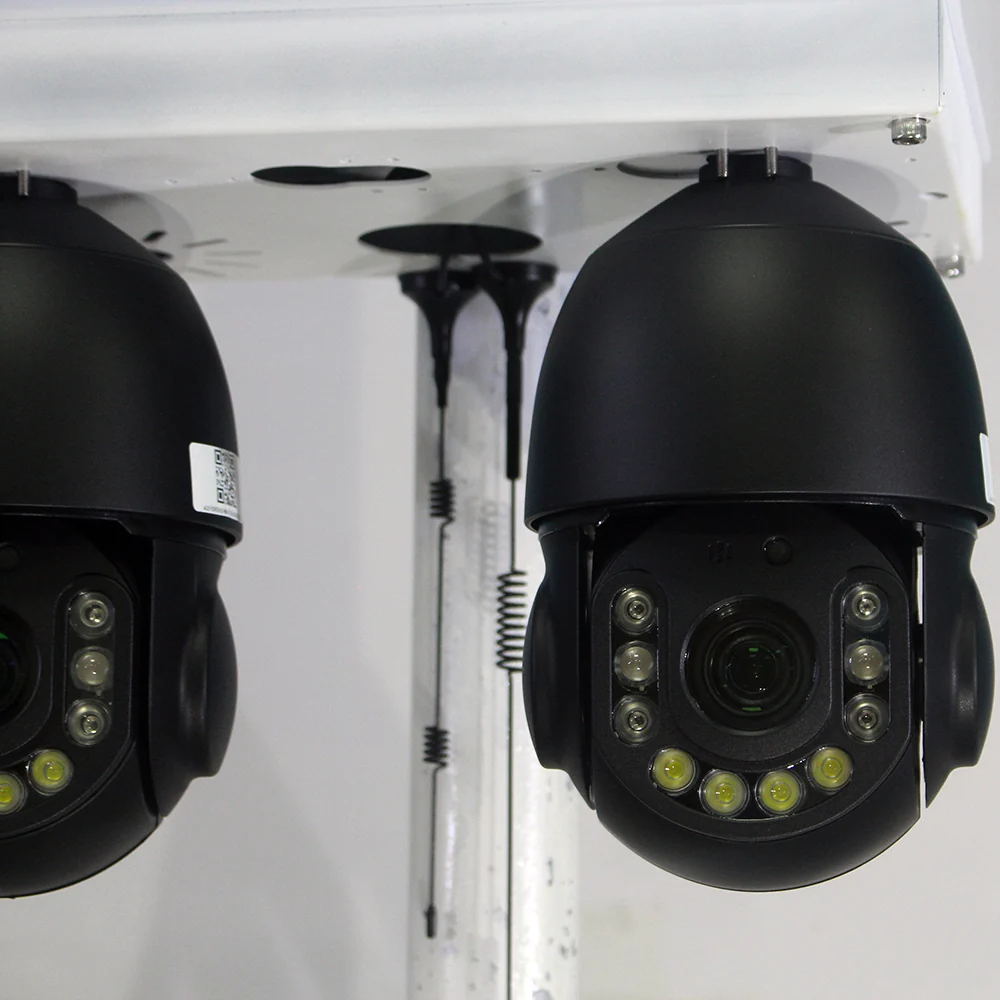
Close view of the two black PTZ heads mounted under the white equipment box of the BS200 card build, with the mounting plate and cable entries visible
Two heads, two cards, nothing between them and the pole.
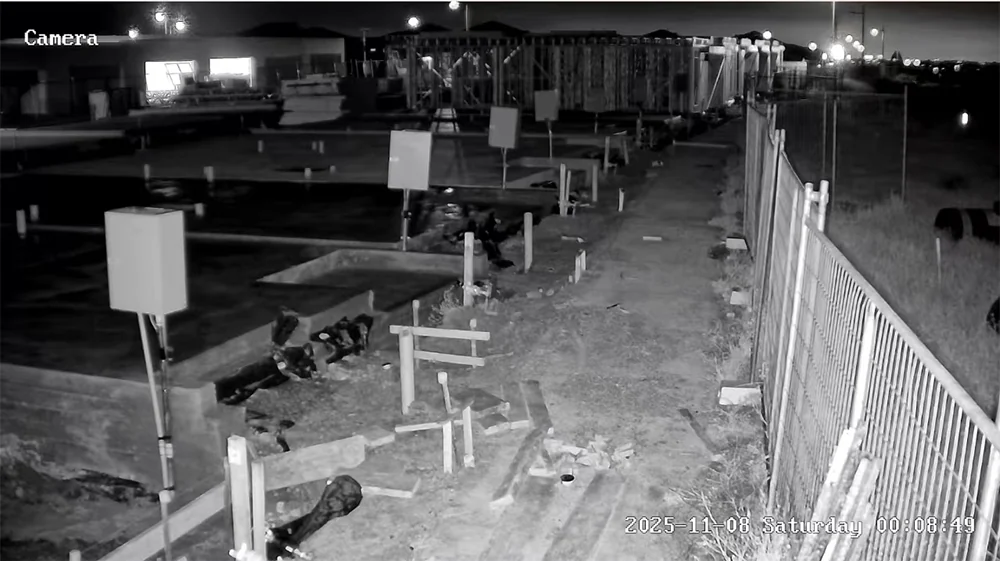
Night view of a fenced construction site in infrared from one of the BS200 heads
The same head after dark: the shift the card records without a recorder.

Who should not buy this

Anyone who needs a month of continuous footage, anyone who reconstructs an evening across both cameras as a matter of routine, and anyone whose team already lives in Hik-Connect. Those are three good reasons to take the recorder build instead, and none of them is a criticism of this one — it is the same tower, and the difference is where the archive lives.

Three consequences of putting the storage in the heads

Six days per head, and that is the number to plan around

256 GB at 4 Mbit/s is about six days of continuous recording, one card per head. The 1 TB recorder build gives you eleven and one timeline. Nothing about the cameras differs — this is purely a decision about where the archive lives and how long it is.

The box is smaller inside, and the array is not

Removing the recorder takes a drive, a bay and about 10 W of heat out of the box. The two panels stay, because the heads are the load: two of them plus the router sit near 0.31 kWh a day, which a 200 W array covers in summer and a 50 Ah pack covers through a grey week. This build has more headroom than the Hikvision one, not less.

One dead card is one dead camera, not a dead system

Two cards in two heads means a failure scopes to one view. The cost is that there is no single timeline: to reconstruct an evening across both heads you pull two cards, or download twice over 4G at whatever the site link manages. If someone watches a wall of monitors, buy the recorder build instead.

Questions

Questions

Can I add a recorder later?

You can add an NVR at the box and record the streams over the local network, but you would be buying back the part this build exists without. If you already know you want a timeline, take the Hikvision build from the start — it is the same tower and the same heads with a 1 TB drive and Hik-Connect instead of Video Link.

How do I get footage off a camera?

Two ways: pull the card, or download through the app or the 64-channel VMS. A day at 4 Mbit/s is about 43 GB, so pulling the card is the realistic route for anything longer than a few hours. Budget for a card reader on site — it is faster than a 4G download by an order of magnitude.

Is the picture the same as the Hikvision builds?

The heads are the same 8 MP 30× PTZ with the same Sony sensor and the same 100 m infrared. What differs is the software stack: Video Link rather than Hik-Connect, with its own VMS on PC. If your team already uses Hik-Connect daily, the familiarity is worth more than the storage difference.

Why does this build not ship with a battery?

Because LiFePO4 packs cannot fly under most carriers' dangerous-goods rules and freight on lead-acid costs more than buying locally. The 20 A controller accepts any 12 V pack; we quote the Ah size against your latitude and the load, and you buy the battery where the site is.

What happens to recording if the SIM plan lapses?

Recording continues. The cards are local, the controller is local, and the only thing that stops is remote viewing. That is the quiet advantage of this architecture over a cloud-dependent one: a lapsed data plan costs you the phone view, not the evidence.

Quote a BS200 dual card build

Tell us the two directions, whether anyone watches a screen, and the delivery country. You get a straight comparison against the 1 TB recorder build and a landed price.