BS200-A3 Flood · Construction site · 4G

The same three cameras, lit instead of sounded

Take the A3 tower, keep the horn, and replace the two red-blue bars with two 20 W LED flood lights on the same alarm relay. That one substitution changes the job: a strobe tells the street that something is happening, a flood light shows you what it is. Forty watts of white light on the approach turns a monochrome infrared picture into colour inside the lit zone, and gives whoever is watching a yard they can actually read.

  • 2 × 20 W LED flood lights on the alarm relay, aimed at the approach
  • 3 × 8 MP infrared bullets, 2.8 mm fixed, 120° apart on one plate, 25–30 m
  • Red horn siren retained — light and sound on one trigger
  • 1 TB Hikvision NVR, four ports, CAM4 free; 200 W of panel, 20 A controller
  • 4G LTE and 2.4 GHz WiFi, Hik-Connect app, free desktop VMS
  • 54 kg as shipped; pole, battery and pole adapter quoted separately
SZGOING BS200-A3 flood tower: two 100 W panels above a white IP66 box with a red horn siren on the right face and two square 20 W LED flood lights hanging under the box beside three white bullet cameras

Why a flood light rather than a strobe?

Because a strobe produces attention and a flood produces evidence. The bars on the other builds are there to be seen from the office window; the LED panels here are there to light the ground the camera is pointed at, so the picture inside their throw is colour, the faces are readable and the guard can tell a fox from a person. The horn stays either way — sound is still what wakes the night watch, light is what tells them where to look.

Specifications

Standard configuration

SpecificationDetail
Solution nameBS200-HIK-A380M-1T-2SA-2LED (8 MP)
Cameras3 × 8 MP infrared bullet, fixed, Hikvision
Lens2.8 mm fixed, about 105° horizontal; 120° apart on one plate
Night vision25–30 m infrared, plus the 2 × 20 W LED flood on alarm
CompressionH.265+
Recording1 TB Hikvision NVR — manual, alarm, motion or timed
Channels4 camera ports; CAM1–CAM3 occupied, CAM4 free
Alarm input2 × outdoor PIR, wired to PIR1 / PIR2 in the box
Alarm outputPre-recorded siren ×1 and 2 × 20 W LED flood light, on one relay
Flood light20 W LED panel ×2, 12 V, on the alarm output — not a dusk-to-dawn lamp
Network4G LTE + 2.4 GHz WiFi (802.11 b/g/n), 12 dBi antennas
SIMNano SIM fitted, 100 MB test data
Band buildEU/Asia/Africa, Americas or Australia — set before dispatch
Remote accessP2P on the device serial — Hik-Connect app, free 64-channel VMS
Solar array2 × 100 W mono panel, 18 V / 5.56 A, 5.5 kg each
Charge control20 A controller inside the equipment box
BatteryNot included — 12.8 V 100 Ah LiFePO4 recommended
Equipment box400 × 250 × 500 mm, IP66
Kit weight54 kg as shipped; the pole adapter is quoted separately on this build
DeliveryDDP sea or rail plus express, door to door, 3–4 weeks

The table describes the standard build; the order datasheet confirms the final configuration.

Product video

Twenty-five seconds of what the flood is for

Daylight views of the yard, then the same yard at night with the LED panels doing the work — the sequence the strobe builds cannot show.

Recorded on the customer's site; the timestamps are theirs.

Product description

Light on the approach

Why the flood panels sit where they sit, and what they do to the picture.

Two kinds of answer to the same PIR

Every build in this family fires on the same pair of PIR inputs. What differs is the alarm output: a speaker array, a horn, red-blue bars, or the two LED panels here. The bars and the panels are both deterrents, but they work on different senses — a strobe is for the neighbours and the police car arriving later, a flood is for the camera and for the guard watching live at 02:00.

  • 2 × 20 W LED panels, 12 V, on the alarm relay
  • Aimed out and down at the ground in front of the tower
  • Hang off the front face of the box, below the equipment shelf
  • Fire with the horn, from either PIR, or manually from the app
  • Two-wire connection — a spare panel is a part, not a service visit

The picture inside the light

Infrared is a compromise: it reaches, but everything it sees is grey, and a grey picture is bad at telling you what you are looking at. Two 20 W panels aimed at the approach give the cameras enough light to keep colour where it matters most — the twenty metres in front of the tower, where a person actually walks.
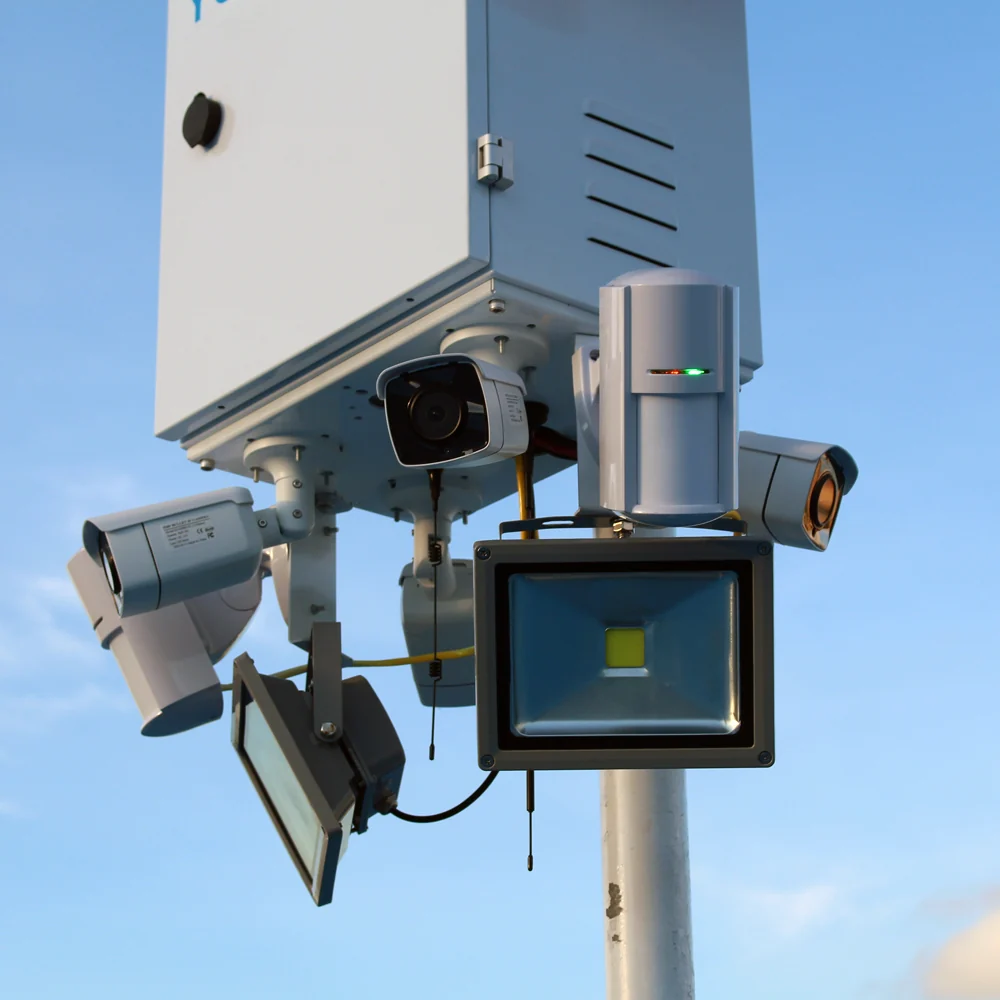
Close view of a 20 W LED flood panel and a bullet camera hanging under the white equipment box of the solar tower
The panel and the camera share a bracket line: light on the subject, nothing flaring into the lens.

What the drive holds

Recording is the same on every build — a 1 TB Hikvision NVR in the box, H.265+, with a fourth camera port free. Three 8 MP mainstreams written continuously fill it in around eight days; motion or timed recording stretches that to weeks. The flood does not change the arithmetic, because it does not write anything — it only decides whether what gets written is colour or grey.
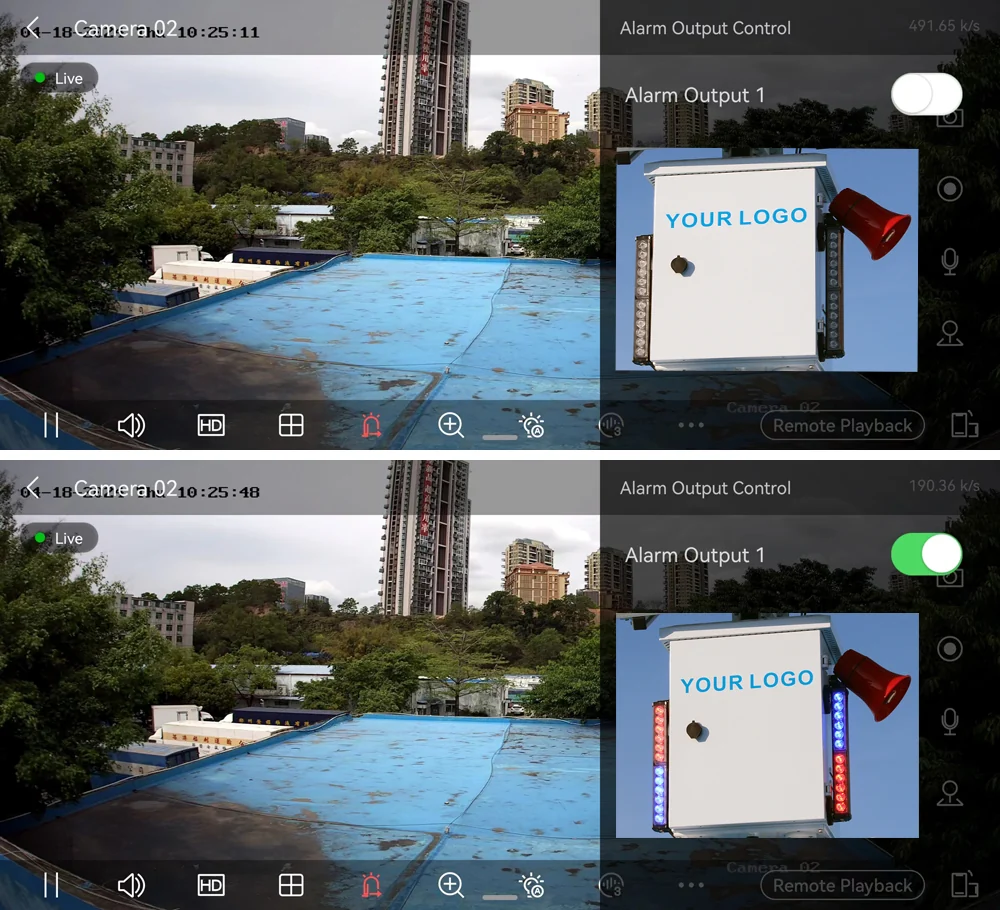
Phone screen showing two Hik-Connect alarm events with snapshots of the same yard, one daylight and one at night
Two events, same yard, same app: daylight and lit night, side by side.

What changes when the alarm is a lamp

40 W is a load, not a feature

Two 20 W panels draw 40 W while they are on. That is fine on an alarm relay — a five-minute event costs about 3 Wh, and the array wipes it out before nine in the morning. It is not fine as a dusk-to-dawn light: eight hours would be 320 Wh a night, roughly half of what the 200 W array makes in an average month and more than it makes in a bad one. If a site wants the yard lit all night, that is a different array, not a different switch.

Colour is a lighting question

Infrared gives you a monochrome picture to 25–30 m whatever the camera is capable of. With forty watts of white light on the approach, the sensor keeps its colour information where the light lands: hi-vis, a vehicle colour, a jacket that is red rather than grey. Past the throw of the floods the picture falls back to infrared, and the honest limit is unchanged.

The light points where the cameras look

The LED panels hang off the front face of the box, below the equipment, aimed out and down at the ground in front of the tower rather than at the horizon. That is the geometry that helps a bullet camera: light on the subject, a dark backdrop behind it, and no flare into the lens from the panel next door.

Questions

Questions

Can the flood lights stay on all night?

Not on this array, and we would rather say so than sell the crate twice. The panels are wired to the alarm output, which means they fire on a PIR event or a manual press in the app, not on a photocell. Running them continuously is 40 W × the dark hours — around 320 Wh for eight hours — which sits on top of a recorder and three cameras that already want most of what 200 W of panel produces in winter. A site that needs permanent lighting is a bigger array and a different controller, and we will quote it as such.

Do the cameras switch to colour at night?

Inside the lit zone, yes — the sensor decides on measured light, and forty watts at the distance the panels are aimed at is enough to keep colour information. Beyond the throw, the cameras fall back to infrared and the picture is monochrome out to 25–30 m. The practical result is a tower that shows you a colour picture of the immediate approach and a grey picture of the fence line, which is usually the right split.

Is the pole adapter in the crate?

Not by default on this build — the packing list here quotes the cameras, bracket, two panels, box, PIR pair, speaker, two LED panels, antennas and SIM, at 54 kg. The 60 mm pole adapter is a line item we add when you ask, and the same adapter as the other BS200 builds fits, up to 170 mm on request. Say which you need on the order and it goes in the same carton.

How is this different from the alarm build and the A3 kit?

Same tower, three different answers to the same trigger. The A3 kit has a speaker array and two red-blue bars; the alarm build swaps in a red horn siren; this one keeps the horn and replaces the bars with two 20 W LED floods. Cameras, recorder, panels, controller, PIR pair and app are identical across all three.

What happens if a light is smashed?

The panels are on a bracket under the box, not behind glass, so a determined intruder can break one — and the recording of them doing it is already on the drive by then, because the cameras are on the same trigger. Spare panels ship as a part; they are a two-wire connection on the relay and do not need a technician on site.

Quote a BS200-A3 flood build

Send the delivery country, the length of the approach you want lit and whether the yard needs light outside alarm events. You get the array size, the battery and a landed price in one reply.