BS200-A3 Alarm · Construction site · 4G

Three lenses holding the circle, and a horn that carries past the fence

This is the three-camera tower with the red horn on the box face instead of the flat speaker array, and two red-blue bars down the edges. The cameras are the ones from the A3 build — three fixed 8 MP bullets on 2.8 mm lenses, 120° apart on one plate, 25–30 m of infrared. What changes is what happens after the PIR fires: a horn is a one-way device, and on a site at 02:00 that is usually the point.

  • 3 × 8 MP infrared bullets, 2.8 mm fixed lenses, one plate, no motors
  • Red horn siren on the right-hand face, 2 red-blue bars down both edges
  • One alarm relay fires the horn and both bars together, from either PIR input
  • 1 TB Hikvision NVR, four ports, CAM4 free; 200 W of panel, 20 A controller
  • 25–30 m infrared; 4G LTE and 2.4 GHz WiFi, Hik-Connect app, free desktop VMS
  • 60 kg as shipped; pole and 12 V battery stay local
SZGOING BS200-A3 alarm tower: two 100 W panels above a white IP66 box with a red horn loudspeaker on the right face, red-blue bars lit down both edges and three white bullet cameras underneath

What does the horn buy that the speaker build does not?

Loudness out of doors, and nothing else. A horn is a compression driver on a flare: it puts a narrow lobe of sound down the approach instead of a cone of speech in every direction, which is why a siren of the same wattage carries further across an open compound than a speaker does. What it cannot do is talk back — there is no microphone in it, so nobody in the app can answer a driver at the gate. If the job is to empty the site at 02:00, take the horn. If the job includes telling a delivery driver where to park at 10:00, take the speaker build instead.

Specifications

Standard configuration

SpecificationDetail
Solution nameBS200-A3-1T-2SA-2FL-HIK (8 MP)
Cameras3 × 8 MP infrared bullet, fixed, Hikvision
Lens2.8 mm fixed, about 105° horizontal
Mounting3 lenses 120° apart on one plate; the plate clamps to the pole as one assembly
Night vision25–30 m infrared
CompressionH.265+
Recording1 TB (1,024 GB) Hikvision NVR — manual, alarm, motion or timed
Channels4 camera ports; CAM1–CAM3 occupied, CAM4 free
Alarm input2 × outdoor PIR, wired to PIR1 / PIR2 in the box
Alarm outputRed horn siren ×1 and red-blue light bars ×2, on one relay
Network4G LTE + 2.4 GHz WiFi (802.11 b/g/n), 12 dBi antennas
SIMNano SIM fitted, 100 MB test data, picks the strongest local operator
Band buildEU/Asia/Africa, Americas or Australia — set before dispatch
ProtocolsTCP, UDP, HTTP, FTP, SMTP, DHCP, DNS, ARP, ICMP, POP3, NTP, IPsec, UPnP, RTP, RTCP
Remote accessP2P on the device serial — Hik-Connect app, free 64-channel VMS for Windows
Solar array2 × 100 W mono panel, 18 V / 5.56 A, 5.5 kg each, on an aluminium bracket
Charge control20 A controller inside the equipment box
BatteryNot included — any 12 V pack; 12.8 V 100 Ah LiFePO4 recommended
Equipment box400 × 250 × 500 mm, IP66
MountingPole adapter for 60 mm poles, up to 170 mm on request
Kit weight60 kg as shipped
DeliveryDDP sea or rail plus express, door to door, 3–4 weeks

The table describes the standard build; the order datasheet confirms the final configuration.

Product video

Twenty-eight seconds: the tower, then what the cameras see

Half a minute of panel, box, horn and the three bullets, then footage from the cameras themselves with the factory captions left in.

Factory footage; the burned-in captions are theirs, the re-encode is ours.

Product description

The alarm end of the tower

What fires, what it sounds like, and what the app shows afterwards.

Two devices, one relay

The alarm output on this build is a single relay carrying the horn and both light bars. That is deliberate: a site that hears a siren but sees nothing has to find the camera first, and a site that sees a flash but hears nothing wakes nobody. Firing them together means the guard opens the app already knowing which way to look, and the person in the compound knows they have been seen before they reach the plant.

  • 2 × outdoor PIR on PIR1 / PIR2, each able to trigger the relay
  • Red horn siren on the right-hand face of the box
  • 2 × red-blue LED bars, one down each vertical edge of the box
  • Manual override in the app, for a guard who wants to challenge someone
  • Voice challenge pre-recorded at the factory, replaced by your own file on request

What the app shows

The recorder is a Hikvision NVR inside the box, so the events, the playback and the export are the Hik-Connect app and the free desktop VMS rather than a proprietary portal. Pull the day of an incident, scrub to the alarm time, download the clip and hand it over — no subscription, no export fee, no question about who owns the footage.
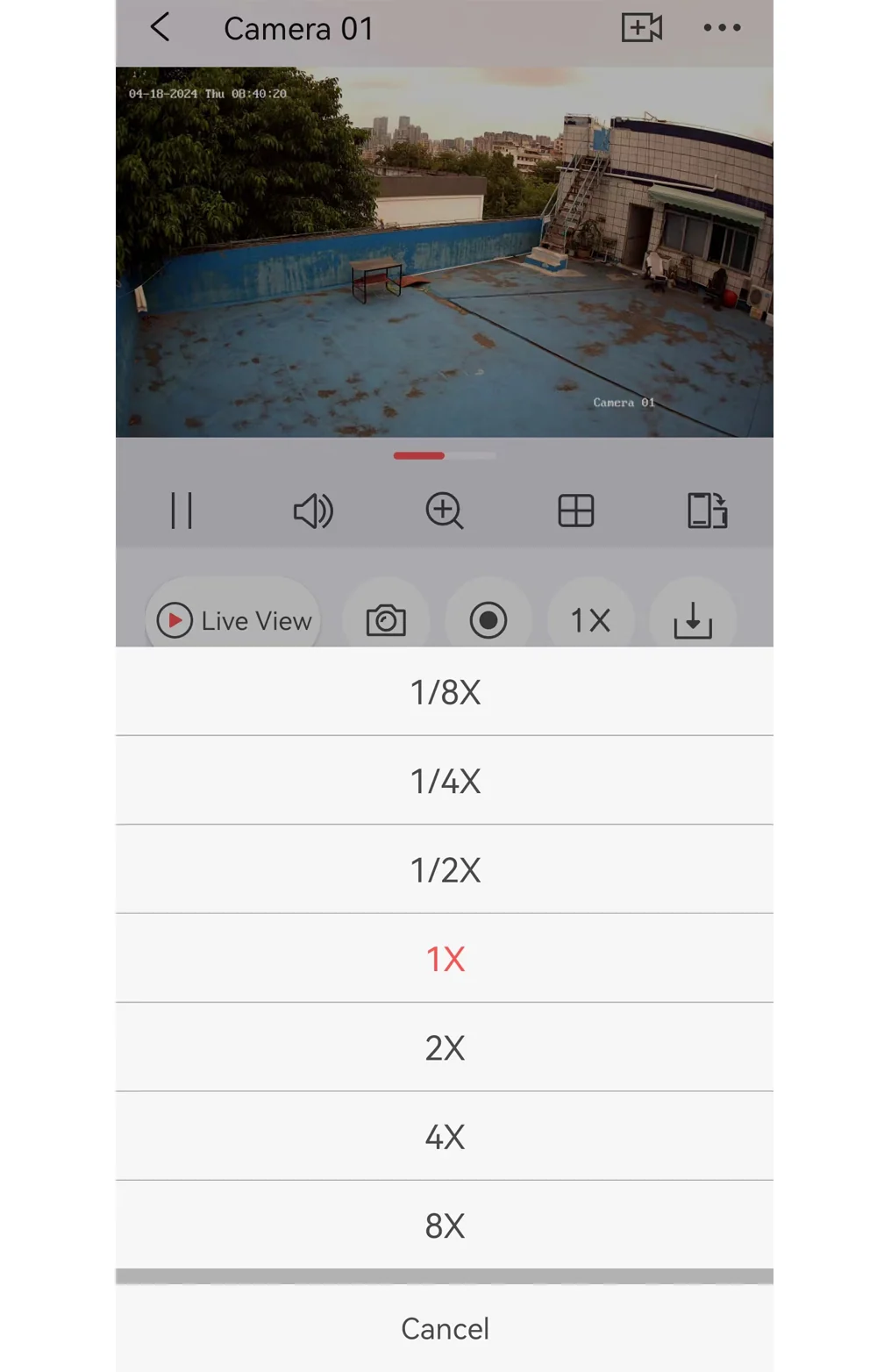
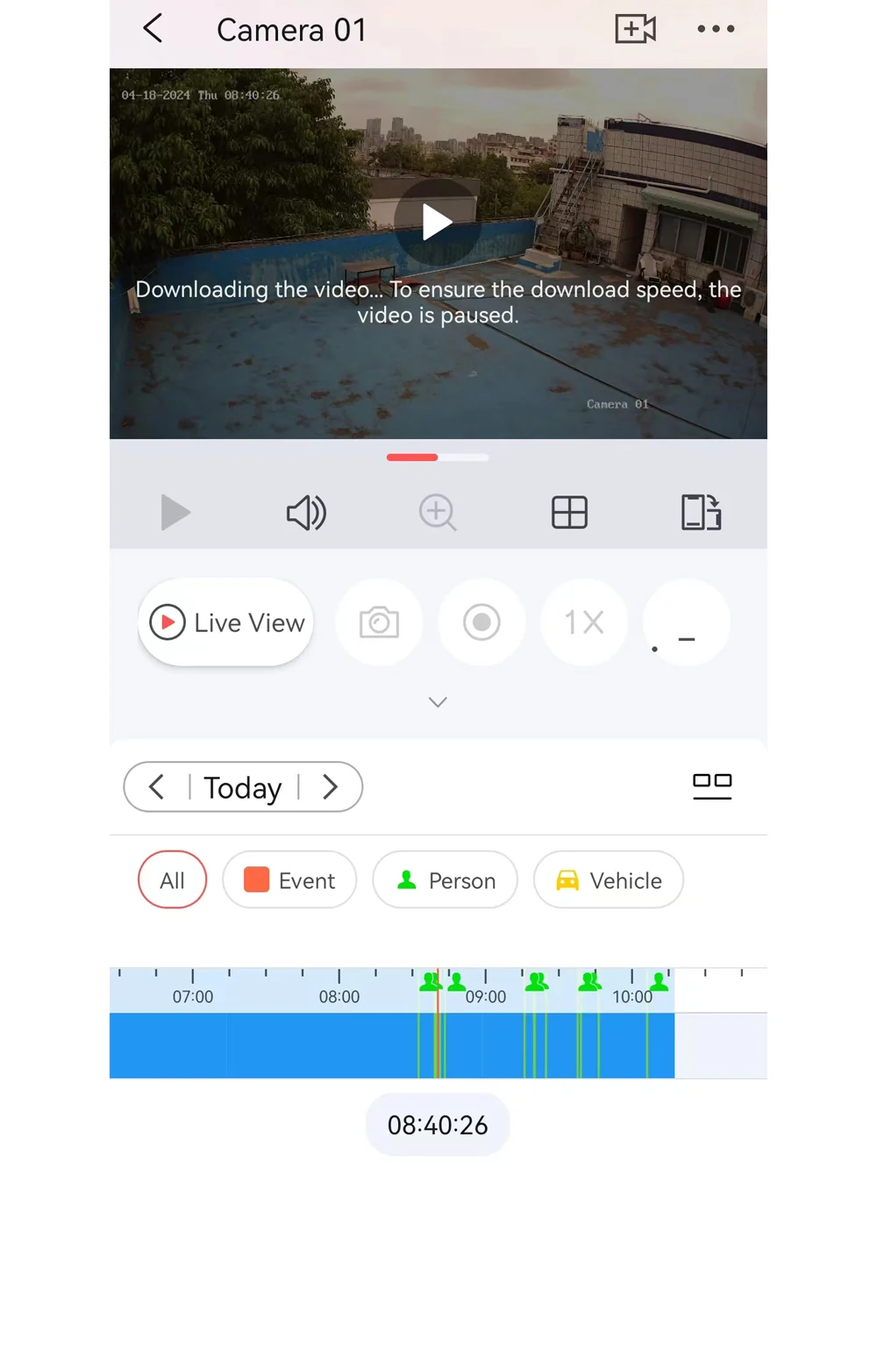
Hik-Connect app playback screen on a phone showing a four-way split of the site cameras with the playback slider
Playback: four channels, one timeline, downloaded to the phone or exported from the VMS.
Phone push notification from the Hik-Connect app: motion detected on Camera 01 with a snapshot and a playback button
The PIR fires, the push lands, the snapshot is already attached.

The same events on a desk

The free VMS client is where a site manager actually reviews a week: four windows, one shared timeline, export to whatever the insurer asked for. It is the same 1 TB drive the app reads, so nothing has to be synchronised between two systems.
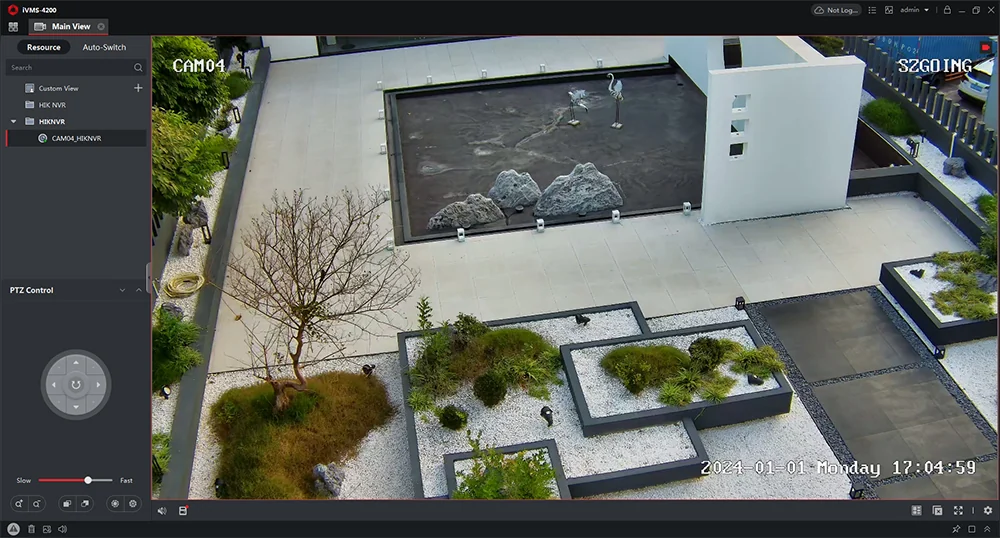
Desktop VMS window showing the site tower cameras on a four-way grid with a playback timeline along the bottom
Free 64-channel VMS: four windows, one timeline, export without a licence.

Where this build stops

No zoom and no pan. The three lenses are aimed once at the factory and cover what they cover; a face is identifiable at about six metres and a person is observable to twenty. That is the right instrument for a compound or a fence line, and the wrong one for reading the plate on a truck 80 m away — for that the site wants the PTZ build with 96 mm of glass behind the same alarm.

Three decisions this build settles

A horn is not a speaker with the volume up

Both are 12 V alarm outputs on the same relay, and they do opposite jobs. The horn is directional, needs no microphone, and puts its energy down the approach. The speaker array is wider, softer, and carries a two-way channel so the app can hold a conversation. You cannot have both through one device, and most sites know which of the two they want after one night of incidents.

One relay, two kinds of answer

The horn and the two bars are wired to the same alarm output, so a PIR trip produces sound and light at the same instant rather than two systems that nearly agree. The same output can be pulled from the app when a guard wants to challenge someone without waiting for the next trigger — useful at shift change, when the compound is full of people who belong there.

Evidence that does not depend on the SIM

Everything lands on the 1 TB drive inside the box, so a dead SIM stops the live view and nothing else. Continuous recording at three 4K mainstreams fills that drive in about eight days, which is the reason the recorder also offers motion and timed modes; a site that only needs events can hold months on the same disk.

Questions

Questions

Can I talk to someone through the horn?

No. The horn is a siren, not a loudspeaker — there is no microphone in it and the pre-recorded voice plays one way. If talkback matters, the same tower ships with a speaker array and a two-way channel on the BS200-A3 page. Some sites buy both habits at once by putting the horn build at the boundary and a speaker build at the gate.

Will the siren and the bars flatten the battery?

No, because they are alarm outputs rather than lamps. A horn of this size pulls roughly 1 A at 12 V while it sounds, so a two-minute event costs about 33 mAh — against a 100 Ah pack that is rounding error, and the array puts it back before lunch. The bars are intermittent LEDs on the same relay. What would flatten the pack is leaving either of them running continuously, which is not how the output is wired.

How is this different from the BS200-A3 kit on the other page?

Cameras, recorder, panels, controller, PIR pair and box are identical. The difference is the alarm device: a red horn siren here, a flat speaker array with two-way audio there. Both carry the two red-blue bars. The kit is 60 kg either way, and the band build, the SIM and the DDP terms are the same on both.

Do the three cameras need aiming on site?

No. The three bullets are fixed to the mounting plate at 120° at the factory and the plate clamps to the pole as a single assembly, so the only site decision is which way the seam points. There is no focus ring to knock and no preset to lose, which is the practical difference between this build and a tower with motors in it. How much of the circle the three lenses actually close depends on the frame width of the lens fitted — we quote the measured horizontal field of view on the order datasheet rather than a round number.

What is not in the crate?

The pole and the battery. Both are bulky, both are cheaper locally, and the pole clamp suits a 60 mm mast out of the box with 170 mm available on request. Everything above the pole arrives wired: two panels, bracket, box, horn, bars, three cameras, PIR pair, antennas, SIM and the install tool kit.

Quote a BS200-A3 alarm build

Send the delivery country, the pole positions and whether the site needs to hear the alarm or talk through it. You get the band build, the battery size and a landed price in one reply.