
The panel is the part you carry
A 200 W array is two panels, a heavier bracket and a lift. A 100 W array is one panel that two people walk up a ladder with, bolted to the same 60 mm pole the box clamps to. That single change is what moves this build from a plant-hire install to something a site manager does on a Saturday — and on a site that moves every few months, the install is the cost that keeps coming back.
- One 100 W mono panel, aluminium bracket, no lifting gear
- IP66 box carrying a 20 A controller and the 4G router
- One head, one pole adapter, one carton
- ≈0.31 kWh a day of load, ≈0.26 kWh harvested in summer
- 40–50 Ah of LiFePO4, and the winter deficit is why it is not 30
The arithmetic is close to the edge on purpose. A larger array would have meant a second panel and a heavier bracket, which is the BS200. What we will not do is ship this with a 30 Ah pack to hit a price: December in most of Europe returns 0.15 kWh a day from this panel and the load does not care what month it is.
128 GB inside the camera is a trade, not a shortcut
With no recorder in the box there is no drive to fail, no bay to keep ventilated and nothing to lose if the box is opened. What you lose is the central timeline: footage lives in the head, so pulling a fortnight means pulling the card or downloading it over 4G at whatever the site link gives you. At 4 Mbit/s a day is about 43 GB — three days fit in the card, a fortnight does not.
What one head cannot do
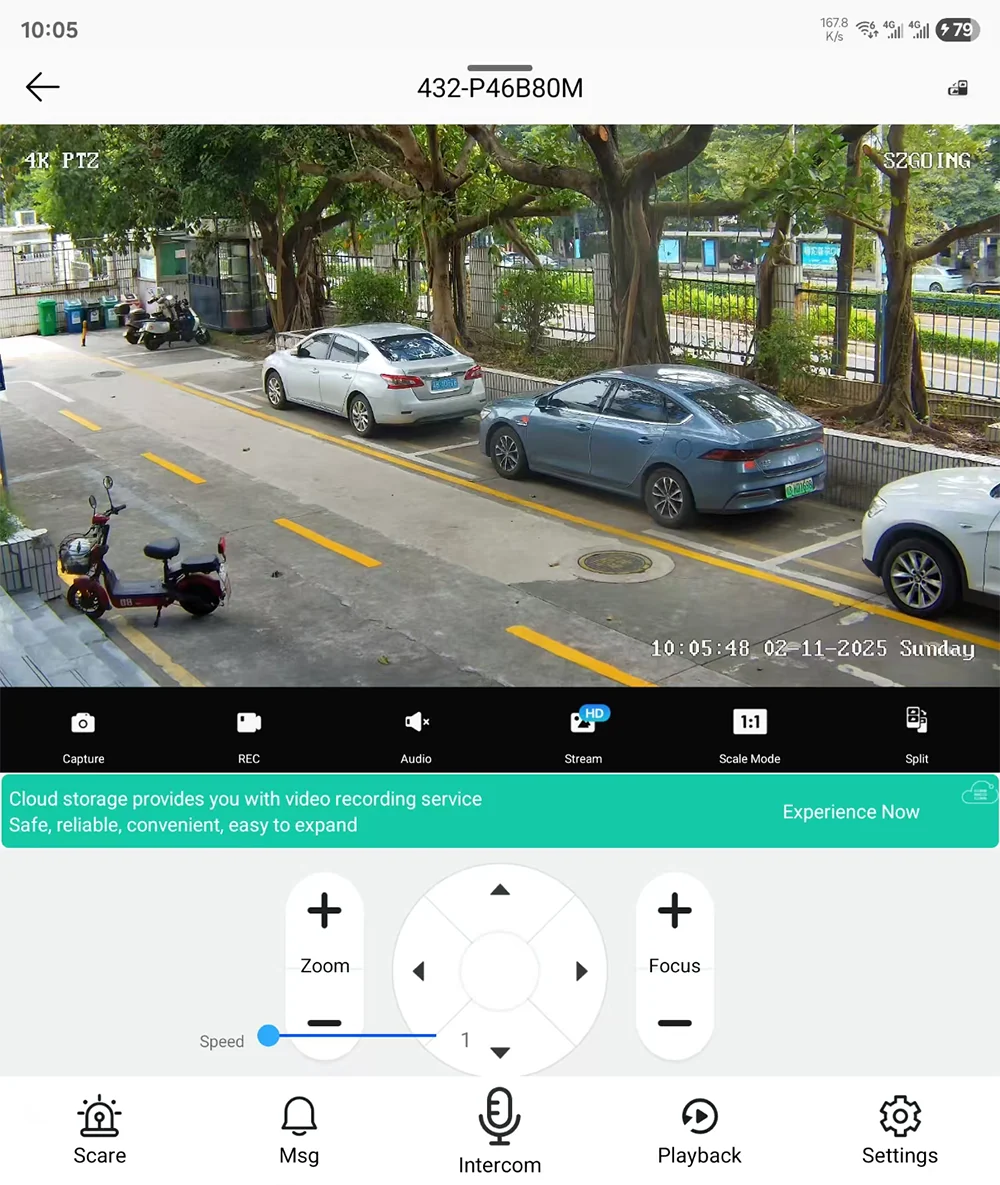
It cannot be in two places, and every PTZ is a pan motor, a tilt motor and a slip ring. If the site is an L, or the gate and the rear fence both matter at the same hour, this is the wrong build — take the two-lens CS100 for coverage or the two-head BS200 for reach in two directions. Buy one head when one direction is genuinely the job, and set the preset before you leave site.