BS200-SA · Construction site · 4G

BS200-SA: it arrives with the SIM in and the band set for the country

Two builds of the same tower leave the workshop. This is the one that goes out with a red horn siren bolted to the box face, a data SIM already in the tray carrying 100 MB of test data, and the 4G module programmed for the region on the shipping label. The last difference is administrative and matters more than it sounds: it ships DDP, so the number on the invoice is the number that puts the crate at your gate.

  • Red horn siren on the box face, 2 red-blue light bars, one app-switchable relay
  • Data SIM fitted at the factory — 100 MB live for testing, then your own plan
  • 4G module set to EU/Asia/Africa, Americas or Australia bands before dispatch
  • 2 × PTZ, 8 MP, 30× optical at 3.2–96 mm, 360° endless pan, 100 m infrared
  • 1 TB Hikvision NVR and a 20 A controller inside the IP66 box; 200 W of panel
  • DDP sea or rail plus express, door to door, 3–4 weeks, duties paid
SZGOING BS200-SA solar site tower: panel above a white box with a red horn loudspeaker, two lit alarm bars and two black PTZ cameras underneath

What is actually different about the -SA build?

Two things you can see and one you cannot. The visible one is the siren: a red horn loudspeaker on the right-hand face of the box instead of the flat speaker array, aimed out from the pole rather than down at it. The invisible ones are the SIM tray leaving the factory populated and the 4G module set to the band plan of the destination — which is why a crate can be hanging on a pole on Monday and streaming on Monday. Panels, camera heads, recorder, controller and pole adapter are the same parts as the FL build, and the kit weighs the same 62 kg.

Specifications

Standard configuration

SpecificationDetail
Solution nameBS200-A2P4K30X-1T-SA-FL-HIK (8 MP)
Cameras2 × PTZ, Sony sensor, 8 MP (4K UHD)
Zoom30× optical, 3.2–96 mm varifocal
Pan / tilt0–360° endless pan, 0–90° tilt
Night vision100 m infrared, smart dual light, full colour at night
CompressionH.265+
Recording1 TB HDD in a Hikvision NVR — continuous, or motion only
Alarm input2 × PIR motion detector, wired to PIR1 / PIR2 on the box
Alarm outputRed horn siren plus 2 red-blue light bars on one relay, switchable in the app
Network4G LTE + 2.4 GHz WiFi (802.11 b/g/n), 12 dBi antennas
SIMData SIM fitted at the factory, 100 MB test data, auto-selects the local operator
Band buildEU/Asia/Africa, Americas or Australia — set before dispatch
Remote accessP2P on the device serial — Hik-Connect app, free 64-channel VMS for Windows
Solar array2 × 100 W mono panel, 18 V / 5.56 A, 1025 × 541 × 30 mm, 5.6 kg each
Charge control20 A controller inside the equipment box
BatteryNot included — any 12 V pack; 12.8 V 100 Ah LiFePO4 recommended
Equipment box400 × 250 × 500 mm, IP66
MountingPole adapter for 60 mm poles, up to 170 mm on request
Kit weight62 kg as shipped
DeliveryDDP sea or rail plus express, door to door, 3–4 weeks

The table describes the standard build; the order datasheet confirms the final configuration.

Product video

Forty-five seconds on the -SA build

The horn siren, both heads and the red-blue bars in sequence, with the alarm output being switched from the app at the end.

Factory footage; the burned-in captions are theirs, the re-encode is ours.

Product description

What arrives, and what it needs

The crate, the pole, the bands and the bill — the half of a site install that is logistics rather than electronics.

Twelve items in one crate

The kit leaves as one shipment: two PTZ heads, two 100 W panels on their aluminium brackets, the IP66 box with the router, the 1 TB recorder and the 20 A controller already inside it, two PIR detectors, two light bars, the horn siren, the antennas, the pole adapter and an install tool kit. The SIM is in its tray.

  • 2 × PTZ camera, 8 MP, 30× optical zoom
  • 2 × 100 W panel on an aluminium bracket
  • IP66 box with 4G/WiFi router, 1 TB Hikvision NVR and 20 A controller
  • Red horn siren, 2 red-blue light bars, 2 PIR detectors
  • Data SIM, WiFi and 4G antennas, pole adapter, install tool kit

Two things are deliberately not in the crate: the pole and the battery. Both are cheaper at the other end of the journey and both are the wrong shape to pay freight on. Everything above the pole arrives pre-wired, so the install is a lift, a clamp and a battery connection.
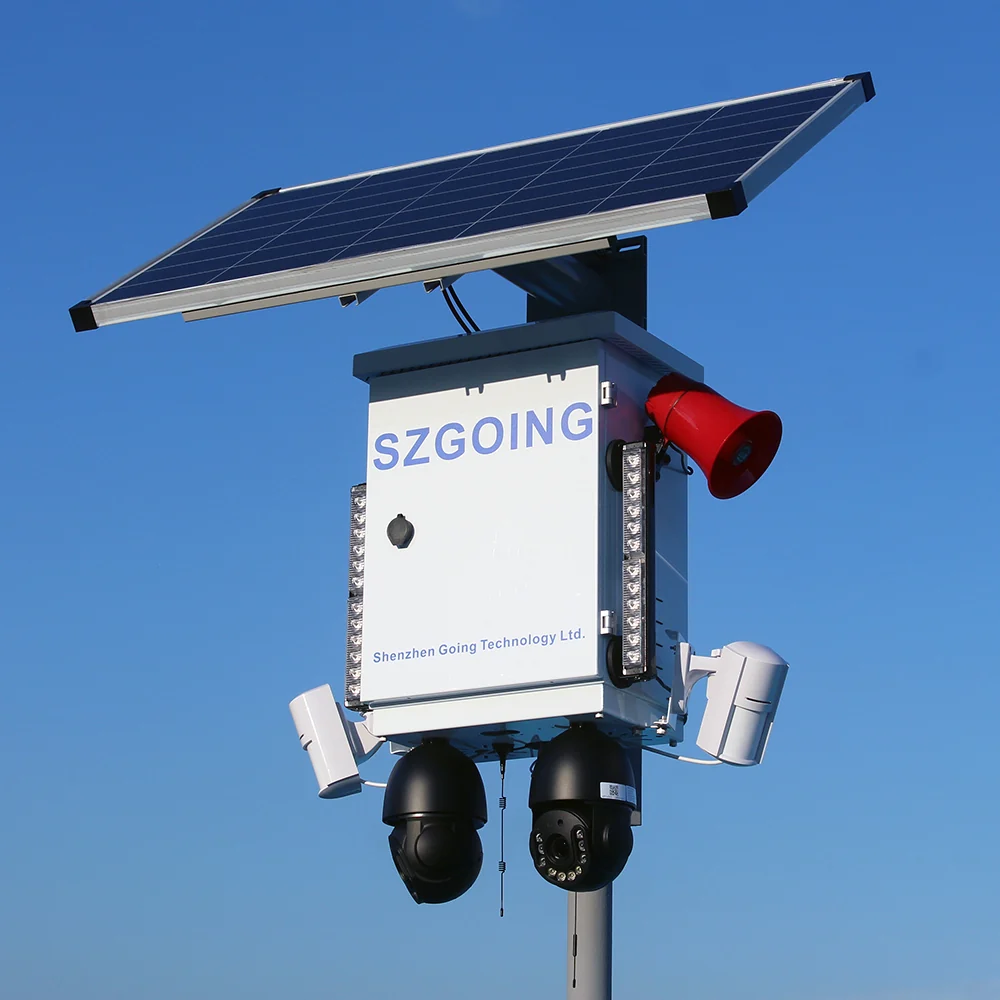
Complete -SA solar site tower: panel above the white equipment box, horn siren and alarm bar on the side, two PTZ cameras below
The assembled tower: panel on the bracket above, box carrying the recorder and the router, two heads on the plate below.

The horn sits where the noise should go

The siren on this build is a red horn loudspeaker on the right-hand face of the box, throwing sound out from the pole instead of down at its base. On a plant yard that difference decides whether the alarm is heard over an excavator or disappears into it. It shares one relay with the two light bars, so a PIR trigger fires light and sound together — and the same relay can be closed by hand from the app when the site is empty and someone wants the siren on demand.
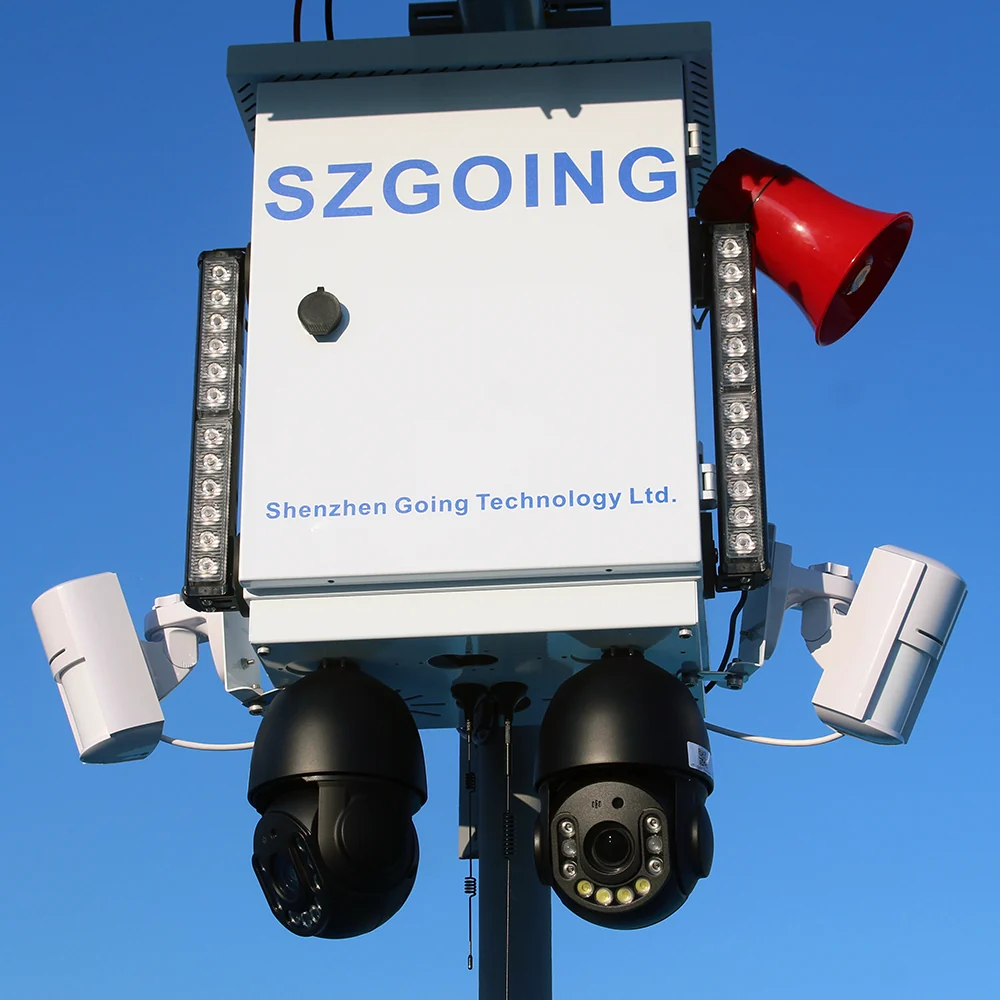
Front of the -SA equipment box with the red horn siren, both red-blue alarm bars lit and the two PTZ heads below
Horn on the corner, both bars lit, one relay behind them.

Two heads, one pole

Each head pans independently through 360° endless and tilts 0–90°, so one can be parked on the gate on a preset while the other sweeps the yard. 3.2–96 mm of optical zoom at 8 MP is what reads a plate or a hi-vis logo at the far fence; the digital zoom on a cheaper sensor reads a shape and calls it evidence.
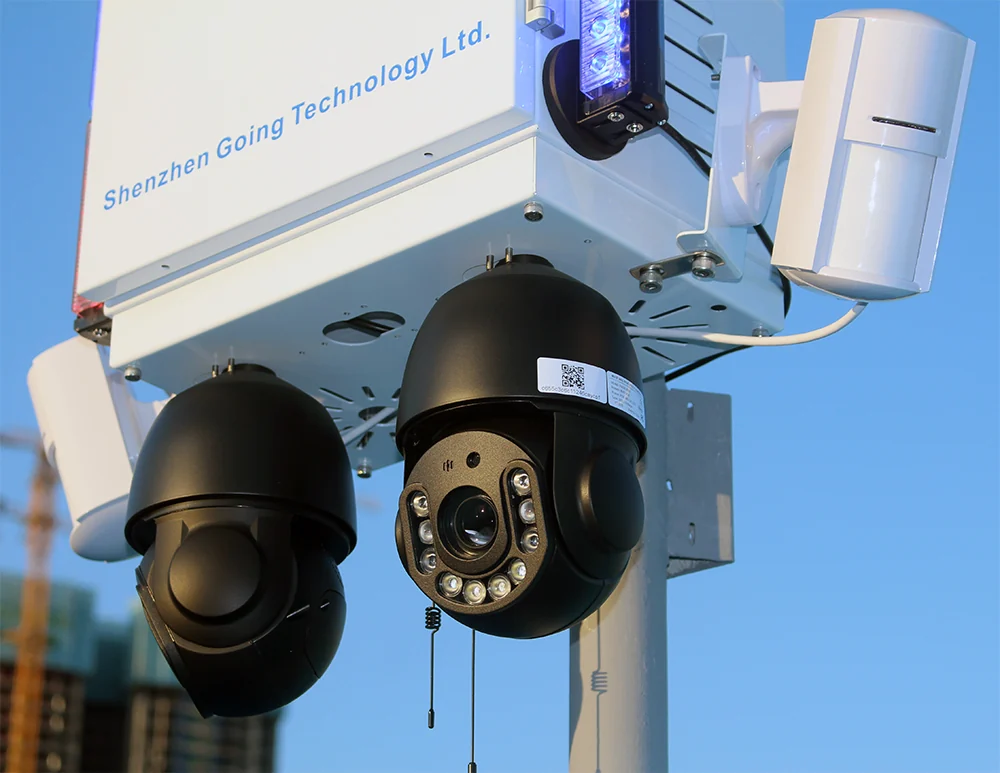
Close view of the two black PTZ camera heads and the white PIR detectors under the equipment box
The two heads and the PIR pair on the plate under the box.

The band build, which is where kits fail

This is the part of a 4G site camera that nobody asks about until it does not work. A module built for one regional plan will find a tower in another country and still refuse to register on it, and no amount of antenna will fix a missing band. These are the three plans we ship against.

BuildLTE FDDLTE TDD3G / 2G fallback
EU · Asia · AfricaB1 2100 · B3 1800 · B7 2600 · B8 900 · B20 800B38 · B40 · B41WCDMA B1 / B8 · GSM 900 / 1800
AmericasB1 2100 · B2 1900 · B4 1700 · B12 700 · B13 700 · B17 700—WCDMA B1 / B2
AustraliaB1 · B3 · B5 850 · B7 · B8 · B20, 700 MHz optionalB38 · B39 · B40 · B41GSM 900 / 1800 · EVDO 800 · TD-SCDMA B34 / B39 · WCDMA B1 / B5 / B8

Operators we have tested on the three plans include AT&T and T-Mobile in the US, KPN, Hutchison 3G UK, O2 and E-Plus in Europe, and Optus in Australia. Where a country sits between plans — Brazil and Mexico are the usual cases — we build to the operator you name rather than to the continent.
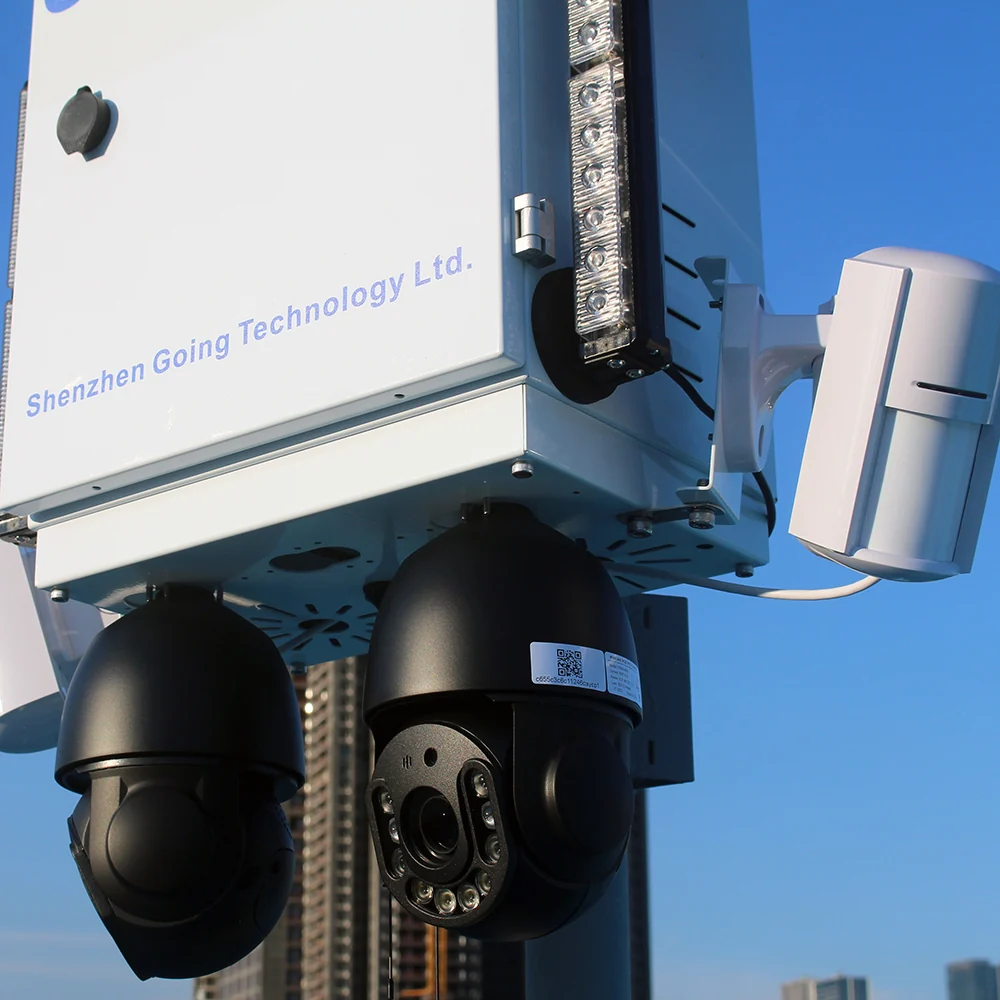
Underside of the equipment box showing the port panel and the mounting plate between the two camera heads
Under the box: the port panel, the antenna arms and the plate that carries both heads.

The SIM is already in the tray

A data SIM ships fitted, with 100 MB loaded, enough to bring the recorder online and look at both cameras before anyone has bought a plan. The router picks the strongest local operator by itself, which is the difference between a site that is watched on the day the tower goes up and one that waits for a contracts meeting with a carrier. When the test data runs out, either take our plan or put your own SIM in the tray — the drive keeps recording either way.
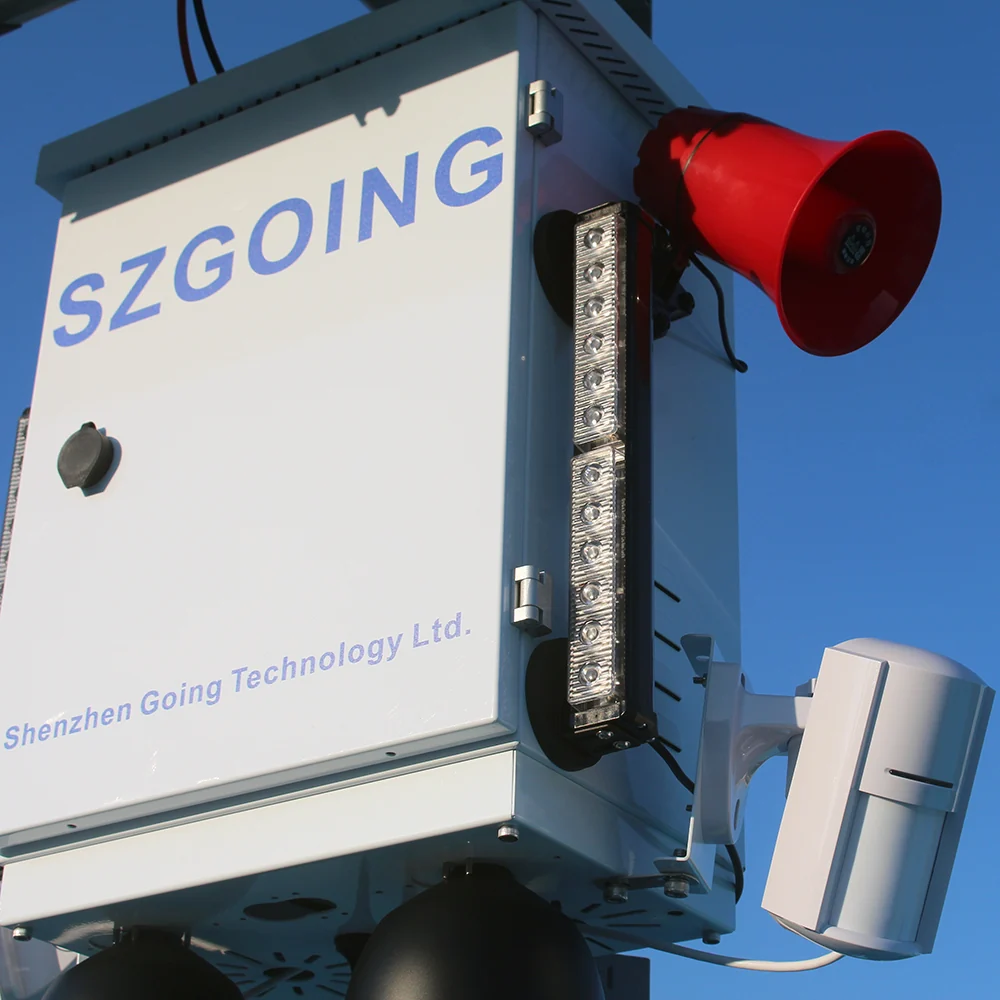
Side of the equipment box with the red horn siren, alarm light bar and a PIR detector below
The side face: horn, light bar and the PIR that triggers them.

The pole is the only thing you buy locally

The adapter clamps a 60 mm pole out of the box; up to 170 mm is available on request, and it is worth saying so on the order rather than discovering it on site. A 62 kg tower is a two-person lift and the bracket is drilled to be reached from a ladder, not from the top of the panel.
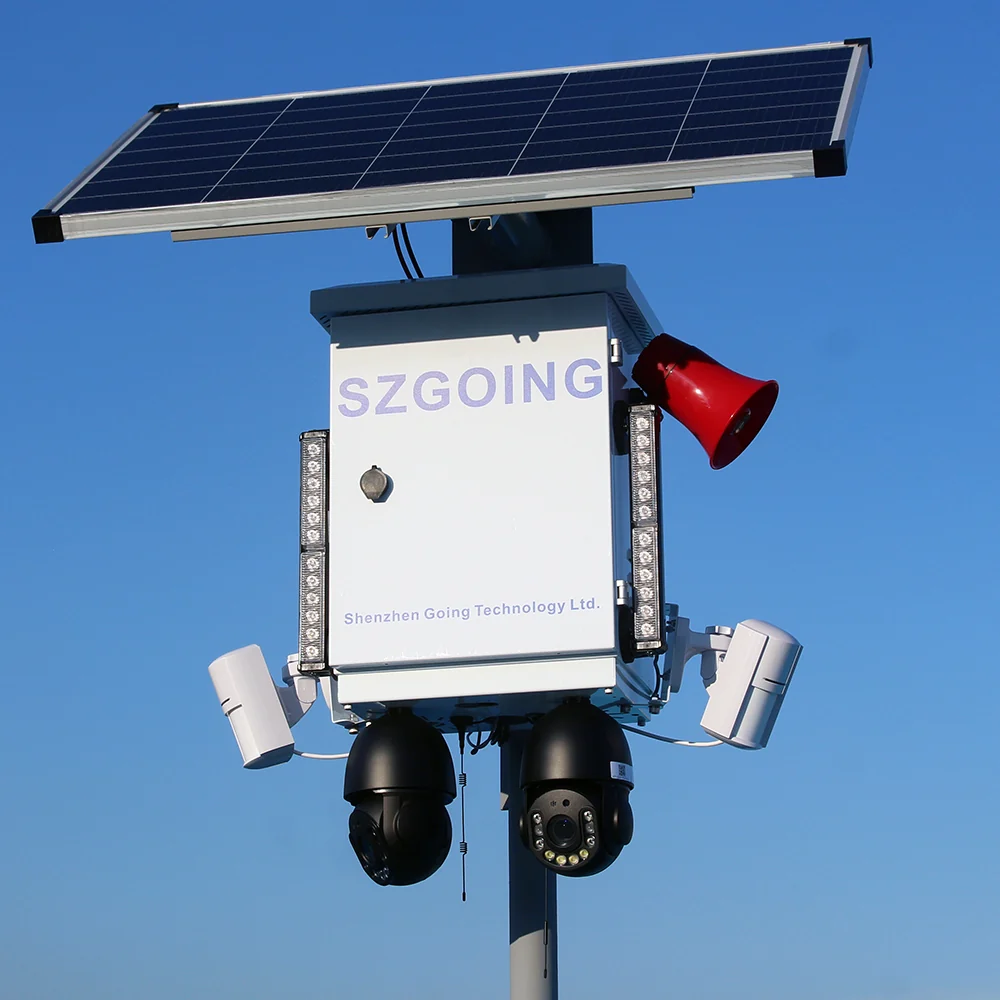
The -SA tower front on with the panel, box and camera heads centred on the pole
Panel, box, heads — the whole assembly on one 60 mm pole.

DDP, in plain terms

Door to door, three to four weeks, sea or rail plus the express leg, with the export paperwork and the import duty inside the price. What it does not cover is anything that is not in the crate — the pole, the battery — and a receiving site that needs a crane. Give us a delivery address instead of a port and the number stops moving.
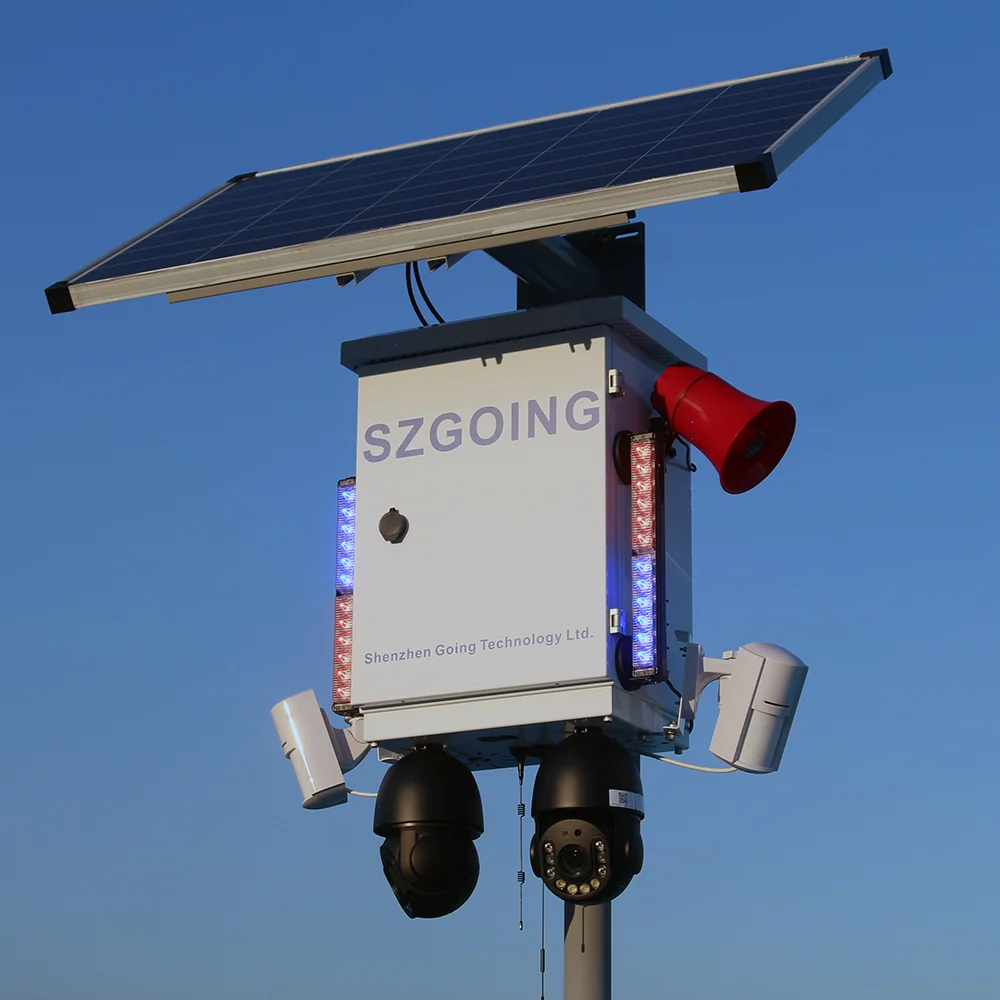
The tower seen from below on its pole, with the panel bracket and both alarm bars visible
From the ground: bracket, box and the bars that answer an intrusion.

Alarm output, on the app

Each camera exposes its own alarm output, so the left head can close the relay for the horn while the right one stays quiet at night — useful when one head overlooks a road. The screen also shows the state of the relay, which is how you tell a siren that is wired wrong from one that is simply not triggered.
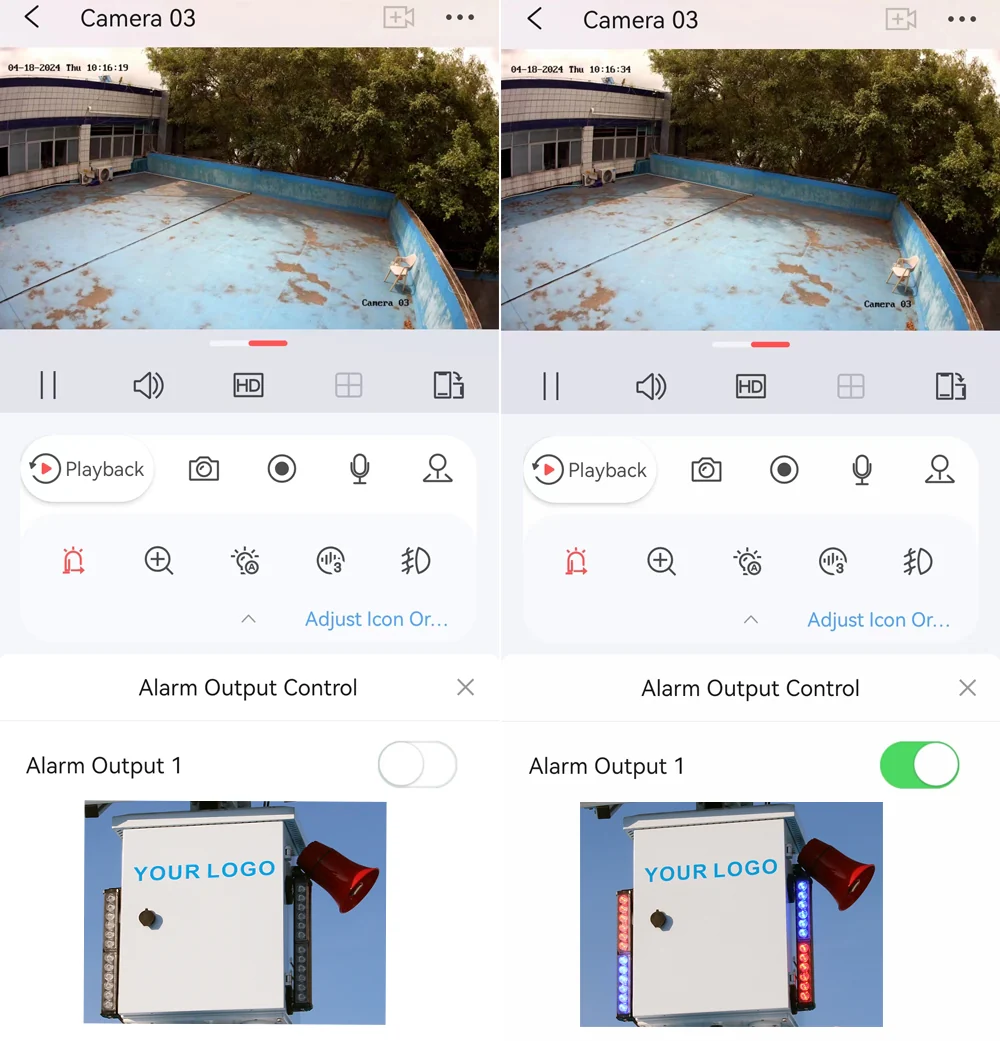
Two phones side by side showing the alarm output control screen for camera 01 and camera 03
Alarm output per camera: two heads, two relays, switched separately.

The one number we need from you

Battery size is the only part of this kit that is genuinely site-specific. Two 100 W panels and a 20 A controller will carry two heads and a recorder in most latitudes; the pack is what decides a bad week. Tell us the worst-month sun hours at the site and whether the recorder runs continuously or on motion, and the pack size comes back with the quote instead of a guess. The terminals take lead-acid, 18650 or LiFePO4 on the same lugs.

Three things that decide whether the crate works

A band plan is not universal

LTE bands are a regional jigsaw. The Americas run B2 / B4 / B12, Europe and Africa sit on B3 / B8 / B20, Australia adds B5 and an optional 700 MHz. A module set for the wrong plan finds a tower and refuses to register on it, so the band build is chosen before the crate is sealed — and the table below is the one we ship against.

DDP, so the invoice is the landed cost

Sea or rail plus express, door to door, three to four weeks, duties paid by us. The alternative — a cheaper FOB number and a broker at the other end — is the quote that grows the week the crate is held.

Online before it is mounted

The tray leaves with a data SIM in it and 100 MB loaded, so the app finds the device the afternoon the tower goes up. Swap in your own SIM whenever the plan suits you; nothing in the box is locked to ours.

Questions

Questions

Which 4G bands does it cover, and can you match my country?

Three band builds, listed in the table further down: EU / Asia / Africa, the Americas, and Australia. Tell us the destination on the order and the module is set to the matching plan before dispatch. If the country straddles two plans — Brazil and Mexico run a mix — we set the module to the operator you name rather than to the continent.

Is the SIM included, and what happens after the 100 MB?

A data SIM is fitted with 100 MB of test data, enough to bring the recorder online and check both cameras from the app. After that it is a data plan, either ours or one you buy locally, and the box accepts a standard SIM in the tray. Recording does not depend on it: the 1 TB drive keeps writing whether or not the SIM has credit.

What does DDP cover?

Freight to your address, the export paperwork and the import duty, on sea or rail plus express, quoted as three to four weeks door to door. It does not cover the pole or the battery, because neither is in the crate, and it does not cover a site that needs a crane to receive it. Give us a delivery address rather than a port and the number is final.

How long from order to a tower on the pole?

Three to four weeks in transit on the DDP route, plus a few days for the band build and the SIM if the order lands outside a stock configuration. Installation itself is an afternoon: two people lift 62 kg of tower onto a 60 mm pole, one person connects the battery, and the commissioning is done in Hik-Connect.

Is this the same camera as the BS200 on the other page?

Same tower, same heads, same recorder — this is the -SA build and the other is the -FL build. The difference is the siren (horn here, flat array there) plus the factory-fitted SIM and the DDP terms. If your site already has a siren or you are buying the kit against a forwarder, the FL build is the cheaper page to be on.

Quote a BS200-SA to your address

Send the delivery country, the site's worst-month sun and the hours of recording you want. You get the band build, the battery size and a landed price in one reply.